Josep de Ros de Les Olives and the Camponal distillery

















License: All Rights Reserved.
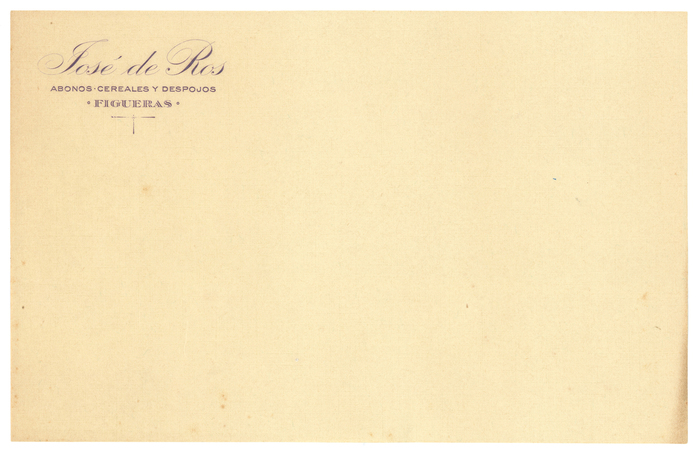
Letterhead by José de Ros
Josep de Ros was an industrialist from Figueres, Spain, born in the manor house of Les Olives into an aristocratic family. Around 1917, he started a business in the fertilizer sector and opened the Camponal liquor distillery a few years later. He had a warehouse on Vilallonga Avenue in Figueres, near the railway station, close to the border with France. He died in 1935.
In the shown letterheads by Josep/José de Ros from around 1930, the difference between typography and lettering is difficult to appreciate (thanks to the staff of Fonts In Use for the clarifications).
License: All Rights Reserved.
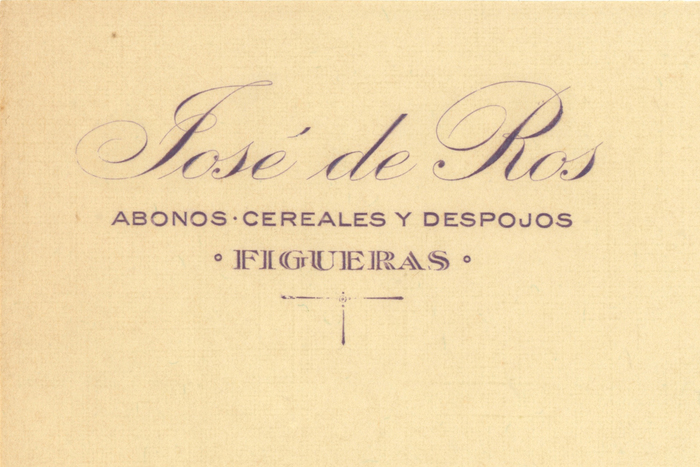
Detail of the letterhead: “José de Ros / Abonos, cereales y despojos / Figueras”. All three styles are lettering.
The name is in an English script close to Stempel’s Künstler-Schreibschrift, known in Spanish as Inglesa Artista semi-negra, with an ornamented J and a characteristic loop around the stem of the R. Josep de Ros i Moner (father) and Josep de Ros i Reig (son) were descendents of Ros de Olano. In Stempel’s 1918 specimen book for the Spanish market, the name of Ros de Olano is set in Inglesa Artista (it’s misspelled as “Olona”; another page in the same book has the correct spelling).
“Figueras” is drawn in a serif with inline. The structure is very close to the Bravour typeface designed by Martin Jacoby-Boy for Stempel in 1912), but with sharper serifs, and a wider letter U with a small spur. I have made a comparison with the solid Bravour negra and the decorated Bravour adornado (Verzierte Bravour).

License: All Rights Reserved.
Comparison of the lettered inline caps to the Bravour typeface
From the obituary for the father in La Veu de l’Empordá, 27 December 1919 (translated):
[…] Josep de Ros was from a noble family, from the stately house of Ros located in the town of Les Olives, although the one they owned in this city could also be considered a manor. Among the ancestors of the house are the famous General Ros de Olano, who was a minister of the Crown and commanded an army corps in the African War during the years 1859 and 1860. The last Prior of the Monastery of Santa Maria de Ripoll also came from the Ros family.
License: All Rights Reserved.
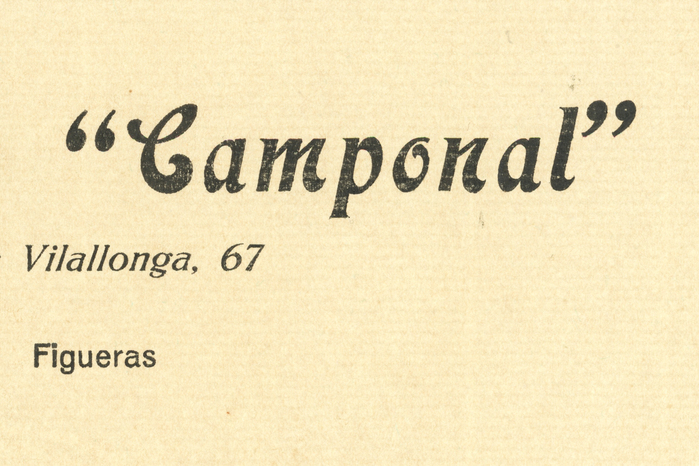
Detail of the letterhead featuring Merveille, Kleukens, and Venus, all by Bauer/Neufville
The Camponal letterhead is typographic: it’s set in the typefaces Merveille, Kleukens-Kursiv and Venus-Grotesk, all by the Bauer type foundry (Merveille originated in the United States under the name Laclede), and distributed in Spain by the Neufville branch in Barcelona. Bauer’s typefaces were the most commonly used ones in Catalonia before the Franco dictatorship (1939). This letterhead helped to locate the forgotten Camponal distillery.

License: All Rights Reserved.
Label featuring Venus schmal dreiviertelfett, Fette Grotesk-Kursiv, and Clio a.k.a. Kleopatra
The Camponal identity uses other typefaces by Bauer and Neufville, like Antigua Mercedes (the Spanish name of Tages-Antiqua), Bernhard-Antiqua, Fette Grotesk-Kursiv, Carnaby (Marocco), Grotesca Estrecha (Neue enge Zeitungs-Grotesk), Florentiner Mediaeval, and Majestic.
A few typefaces could have been sourced from different type foundries based in Madrid and Valencia, like Clio (Ludwig Wagner, 1903) distributed by Neufville/Bauer as Kleopatra and by Gans as Aurora; or Aurora Grotesk (Wagner & Schmidt, 1908) sold by Gans as Grotesca Ideal and by Fundición Tipográfica Nacional as Grotesca Estrecha.
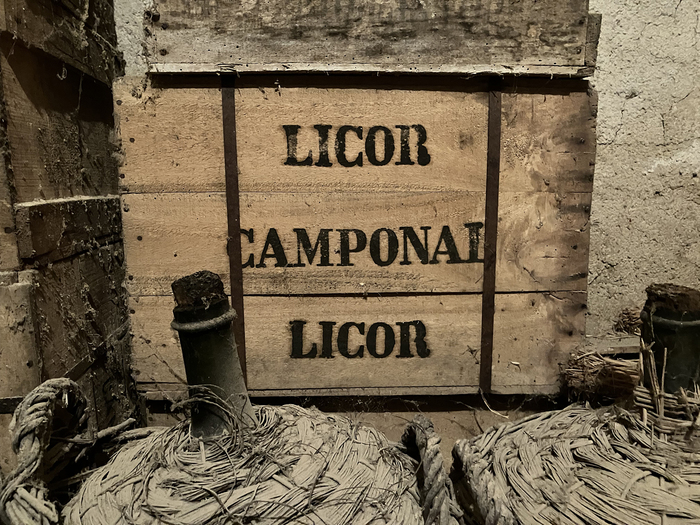
Typography and lettering also coexist in other elements, such as in the Camponal liquour labels and packaging.
Learn more about Josep de Ros and the Camponal distillery.
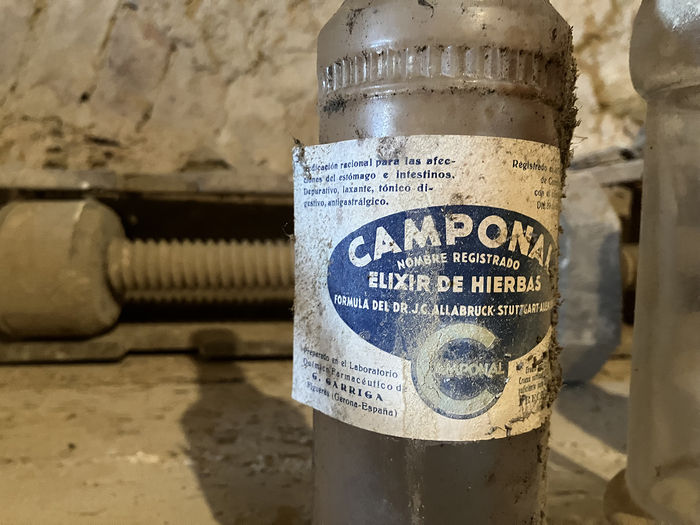
License: All Rights Reserved.
Camponal label featuring lettering (white letters), Kleukens-Antiqua, and Majestic
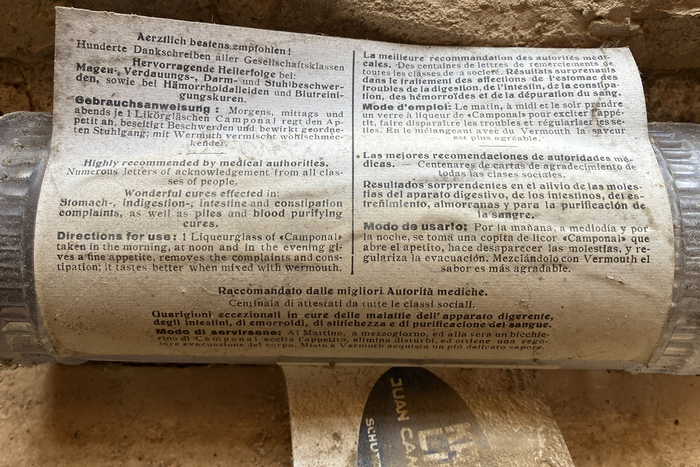
License: All Rights Reserved.
Label featuring Kleukens-Antiqua, Venus, and an unidentified typeface (similar to Stempel’s Holzhausen-Antiqua, but with a different M)
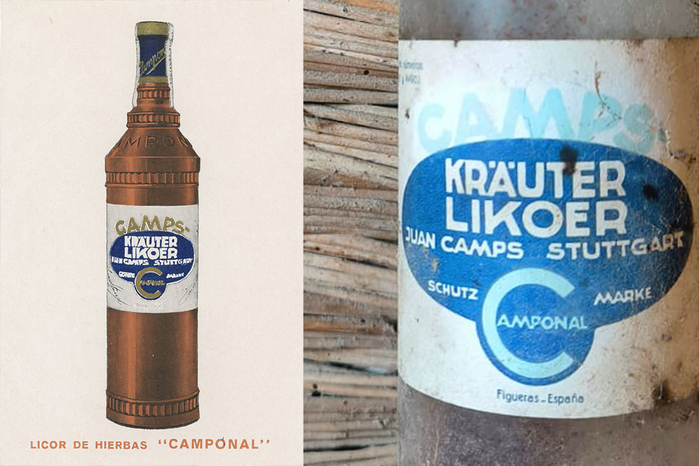
License: All Rights Reserved.
Bottle label ft. lettering, an unidentified grotesk for “Licor de Hierbas ‘Camponal’” (similar to Grotesca Favorita by Gans), and Bauer’s Kleopatra
License: All Rights Reserved.
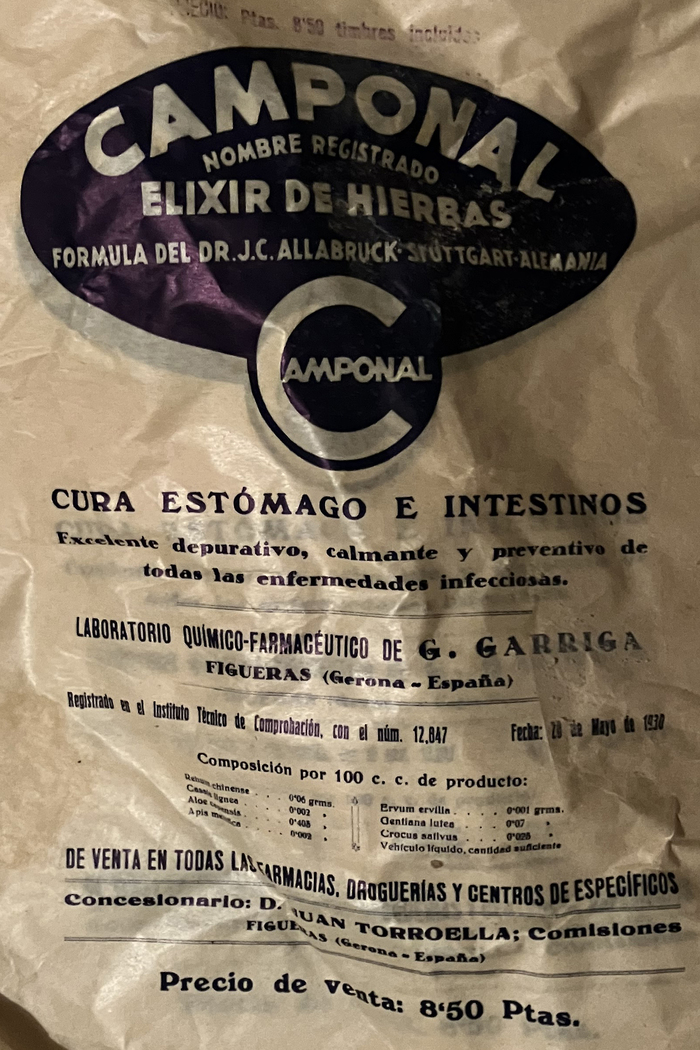
Packaging ft. lettering (the reversed letters at the top), Marocco a.k.a. Carnaby for “Cura estómago e intestinos”, Majestic for “G. Garriga”, and other unidentified typefaces

License: All Rights Reserved.
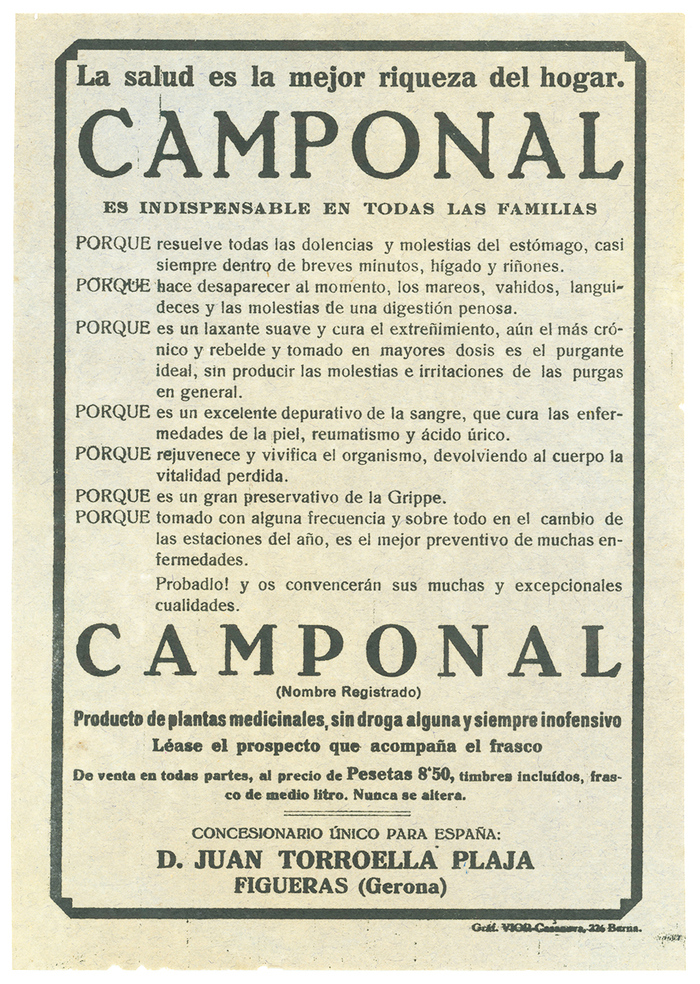
Camponal ad ft. Bernhard-Antiqua, Universitäts-Antiqua a.k.a Druckhaus-Antiqua, Neue enge Zeitungs-Grotesk, Tages-Antiqua a.k.a. Antigua Mercedes, and others
License: All Rights Reserved.
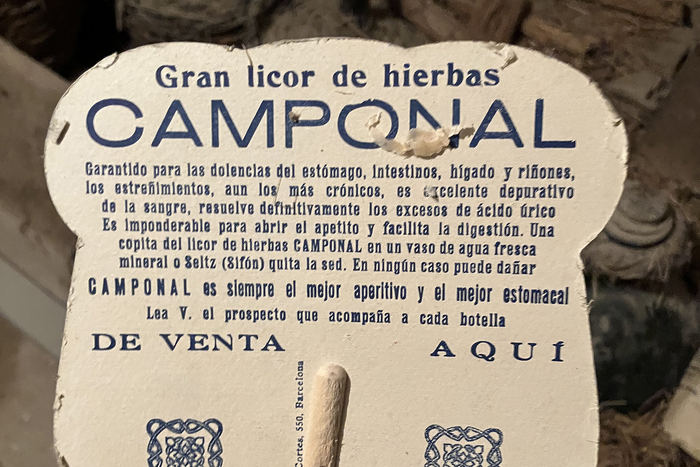
Point-of-sale display ft. Columbus, a version of Edel-Grotesk (probably Groteska Moderna by Fundición Tipográfica Nacional), and Schmale halbfette Etienne
License: All Rights Reserved.
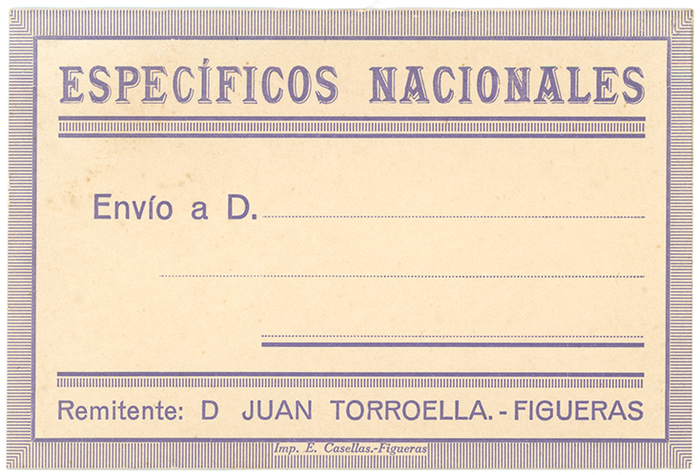
Camponal ad ft. Bernhard-Antiqua, Tages-Antiqua a.k.a. Antigua Mercedes, Universitäts-Antiqua, Florentiner Mediaeval, Kleukens-Antiqua, and an unidentified grotesk
License: All Rights Reserved.
Address label ft. Etienne Sombreada (Gans’s version of Umstochene Etienne by Schelter & Giesecke), Venus, and Antigua Veneciana (Gans’s version of ATF’s Cheltenham)
License: All Rights Reserved.
This post was originally published at Fonts In Use