Villa Libertad. Une communauté italienne en Argentine

Source: www.instagram.com Photo: Ryan Cracco. Ryan Cracco. License: All Rights Reserved.


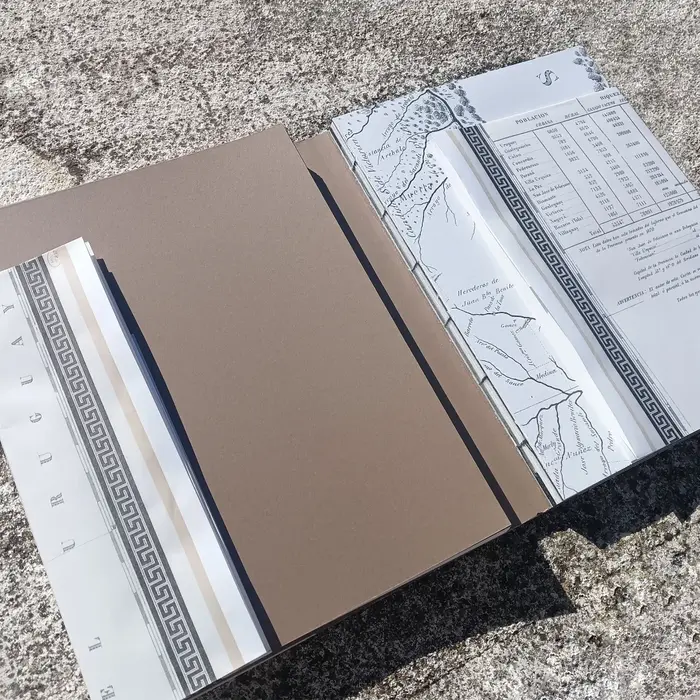
Villa Libertad, Une communauté italienne en Argentine is the title of my Master’s degree project made at ÉSAD Pau. It is the result of a graphic and historical investigation initiated from genealogical research conducted in the northeast of Argentina. In the parish archives, I encountered a forgotten priest called Pedro Cisamolo who was living in a town named Villa Libertad and populated almost exclusively by Europeans. Between 1895 and 1901, this individual drew more than a thousand illustrations in those registers: animals, plants, landscapes, people, religious iconographies, buildings, smiling suns, etc.
This discovery was the point of entry into the history of the migratory and colonizing policies of 19th century Argentina. The law of 1876, in particular, is considered a turning point because it allowed, at the expense of the Argentinian Government, the coming of thousand Europeans who upon arrival were offered land to cultivate. Thus, in many provinces, colonies – as an artificial urban centers – were established. Villa Libertad is one of them, the first national colony of the Entre Ríos province.
This editorial project is made up of two complementary books. The first relates a historical study rooted in 19th century archives and more recent works conducted by Alejandro Fernández, an Argentinian historian. This book, through the faithful translation of these documents, contextualizes the founding and development of the Villa Libertad colony from 1872 to 1901. The second book compiles the huge amount of illustrated signatures made by Pedro Cisamolo in the parish archives. From scribble to calligraphy and finally to a whimsical bestiary, the evolution of his signatures eventually builds a singular repertoire of scriptural and figurative forms.
To emphasize the historical link between Italy and Argentina, typefaces from both countries were used. Titles and section markers are set in Borges Gris from the Argentinian foundry PampaType, and the body text in Etrusco Now, from the Italian foundry Zetafonts.
Ryan Cracco. License: All Rights Reserved.

Source: www.instagram.com Ryan Cracco. License: All Rights Reserved.

Source: www.instagram.com Ryan Cracco. License: All Rights Reserved.

Source: www.instagram.com Ryan Cracco. License: All Rights Reserved.

Source: www.instagram.com Ryan Cracco. License: All Rights Reserved.

Source: www.instagram.com Ryan Cracco. License: All Rights Reserved.
This post was originally published at Fonts In Use