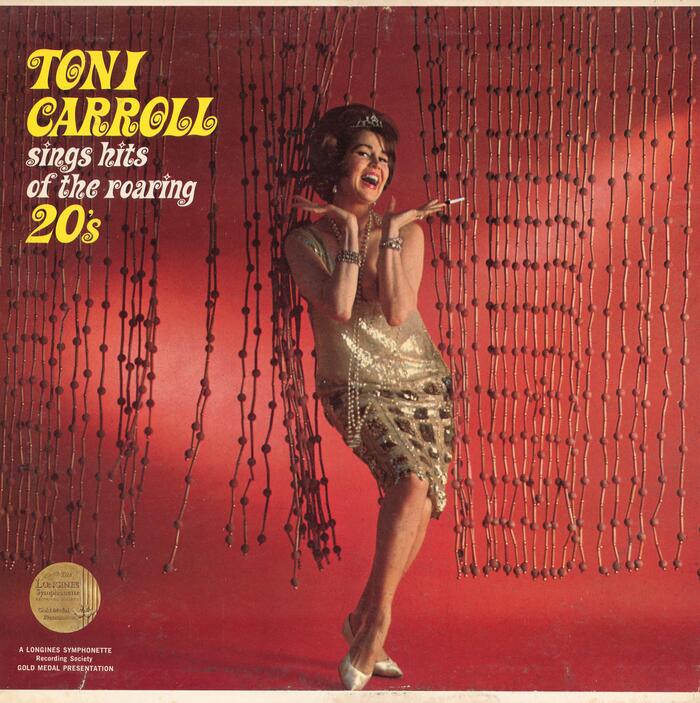
Toni Carroll – Sings Hits of the Roaring 20’s album art
Source: archive.org Internet Archive. License: All Rights Reserved.


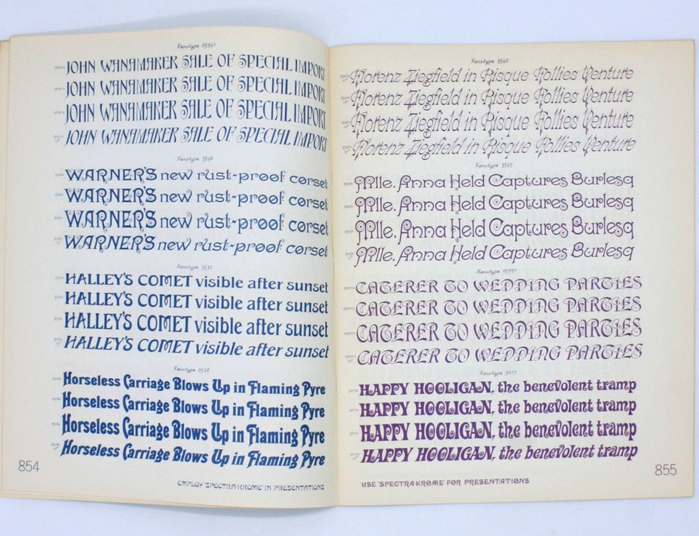
Victor Caruso’s Roxy was first shown in Photo-Lettering’s Art Nouveau Xenotypes 1895–1905 from 1962 under the moniker Xenotype 5017. Stylistically, it doesn’t evoke associations to Art Nouveau (nor with the Roaring Twenties), but really is a child of the 1960s, and a harbinger of the Swinging Sixties and Flower Power.
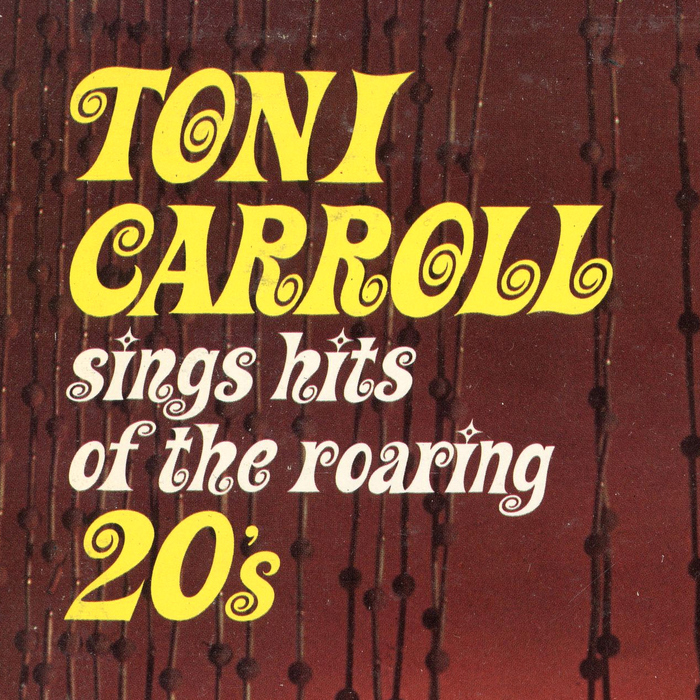
The cover of Toni Carroll’s second album from 1964 is the earliest use of Caruso Roxy documented on Fonts In Use so far. The uncredited designer specified a slanted setting – as seen in the last line of the specimen shown below. Note the two forms for s. Caruso Roxy offered numerous alternates: for frequent characters like n and i, there were a whopping six or even seven different forms, respectively.
thedenverbeard2013. License: All Rights Reserved.
Spread with pages 854 and 855 from Art Nouveau Xenotypes 1895–1905. Xenotype 5017 a.k.a. Caruso Roxy (bottom right) is an outlier: the other faces are from the period mentioned in the title, or were at least around at the time: Flirt (c.1886), Thalia (1894), Gazelle (by 1893), Kismet (1879), and two adaptations of alphabets drawn by Peter Schnorr before 1905. The source of Xenotype 3532 is yet unidentified.
Source: archive.org Internet Archive. License: All Rights Reserved.
Detail
This post was originally published at Fonts In Use