Pixar short films credits (1980s)

Source: animationscreencaps.com Pixar. License: All Rights Reserved.
End credit from Luxo Jr. (1986)
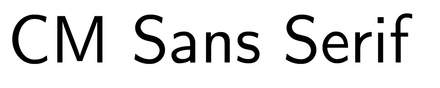
First seen in the opening titles and ending credits to the 1984 short film The Adventures of André & Wally B., this typeface can also be found in the credits for every subsequent Pixar short from Luxo Jr. to Tin Toy. The same digital font can also be seen in rare behind-the-scenes videos included in the obscure Made in Port Richmond DVD produced exclusively for Pixar employees as well as Pixar Image Computer demos.
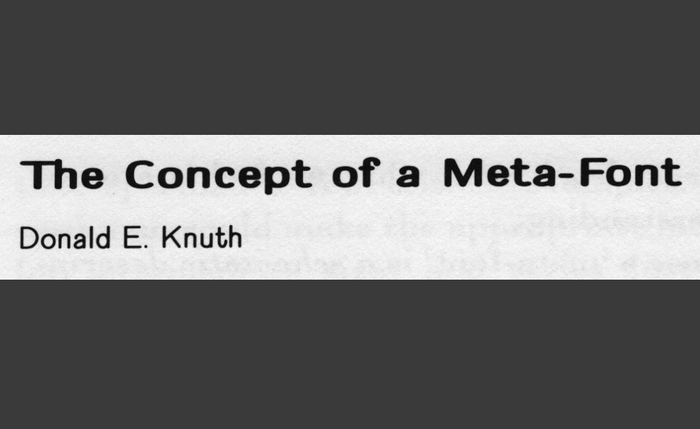
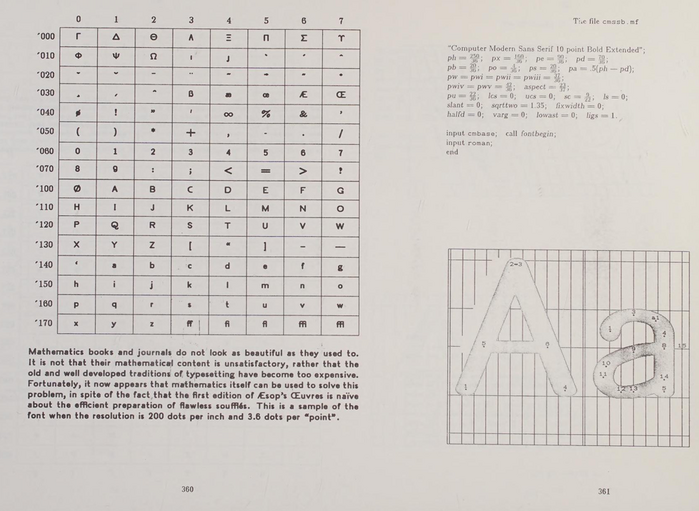
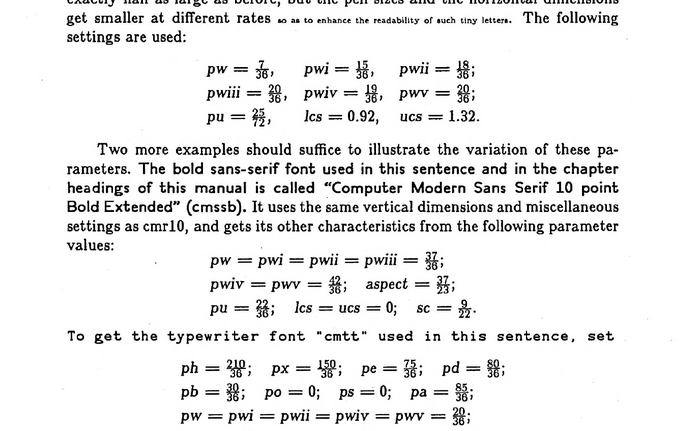
It turns out that the origins of this font are more “nerdy” than one would expect. Thanks to scans recently uploaded to the Internet Archive, we can confirm that Pixar used Donald E. Knuth's pioneering program Metafont and an early version of the included font Computer Modern Sans Serif (CMSS, also created by Knuth). Side-note: back when Pixar were known as the Lucasfilm Computer Graphics Division they made use of both Computer Modern Serif and Sans Serif for Admiral James T. Kirk's optical retina scan display right before the Genesis sequence in Star Trek II. This film came out in 1982 which means this is the earliest known use of the font by Lucasfilm/Pixar.
However, the current version of CMSS today looks quite different from what was used back in the early 1980s. Metafont was first released in 1979 but by mid-1984, both Metafont and Computer Modern received major updates. The TEX Users Group Newsletter (TUGboat) last used the early version of CMSS in their issue from May 1984 (Volume 5, No. 1). That same issue, Knuth remarks about revising Computer Modern which he viewed as a work-in-progress.
CMSS was re-designed with input from Richard Southall (1937–2015) and was included in newer versions of TeX and Metafont. Users then replaced their old files with the newer font, which is how the pre-1984 version almost became lost.
We can see in the images provided that the typeface in the Pixar films matches up perfectly with the font seen in the earliest Metafont papers and books written by Knuth (the lower-case t found in “Concept of a Meta-Font” is a dead giveaway). “The Computer Modern Family of Typefaces” (published in January 1980) also has a couple of Sans Serif fonts that match up very closely with the font seen in the Pixar shorts. This implies that Pixar was using the same version of this font from at least 1982 to 1989.
Addendum: I discovered the missing bitmap glyphs for the pre-1984 version of Computer Modern Sans Serif (they were located in a Stanford University backup archive). This means it is now possible to accurately recreate this font without having to use MetaFont79.

Source: animationscreencaps.com Pixar. License: All Rights Reserved.
Title card of The Adventures of André and Wally B. (1984)
Source: veryinteractive.net License: All Rights Reserved.
License: All Rights Reserved.
License: All Rights Reserved.
This post was originally published at Fonts In Use