And No Birds Sang by Farley Mowat, McClelland & Stewart
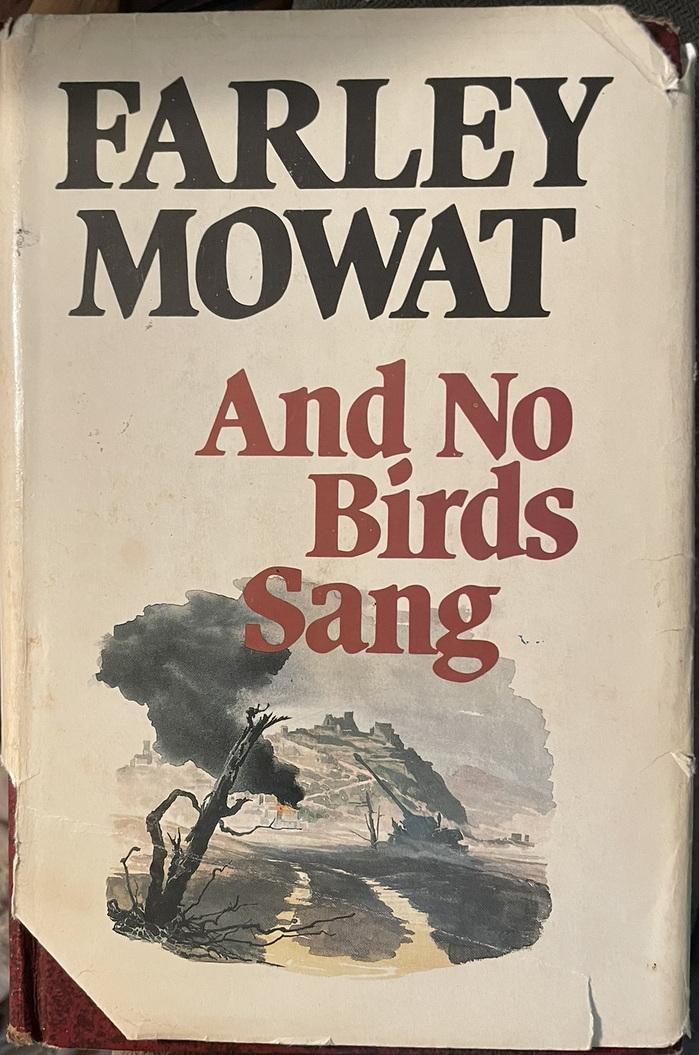
Photo: Ian Hooker. Ian Hooker. License: All Rights Reserved.



Farley Mowat (1921–2014) was a popular Canadian author, known for his environmentalism (Never Cry Wolf, also a feature film), humour (The Dog Who Wouldn’t Be, Owls in the Family, The Boat Who Wouldn’t Float), and advocacy for indigenous people (People of the Deer). He was a contrarian with strong views, who responded forcefully to his many critics.
In the Second World War, he joined his local regiment at the age of 18. In the Italian Campaign, he was an infantry platoon commander from the landing in Sicily to the Battle of Ortona, which was infamous for fierce street fighting and heavy casualties. After Ortona, he became an intelligence officer, where his duties included organising food relief for Dutch civilians during the Liberation of the Netherlands. He also selected much of the equipment preserved for monuments and museums, including many of the pieces in the Canadian War Museum in Ottawa. And No Birds Sang (1979) is about his personal experiences in combat, while The Regiment (1955) is about the unit he fought with, the Hastings and Prince Edward Regiment.
He was published by McClelland & Stewart, which specialized in promoting Canadian authors, especially during the high point of Canadian cultural nationalism in the 1960s and 1970s. The typeface on this first edition cover is Graphis Extra Bold, by Les Usherwood (1932–1983) of Typsettra in Toronto. Graphis was later extended as Barnyard. The jacket illustration is by Alan Daniel and depicts Ortona.
The title is taken from the poem La Belle Dame sans Merci (1818) by John Keats.
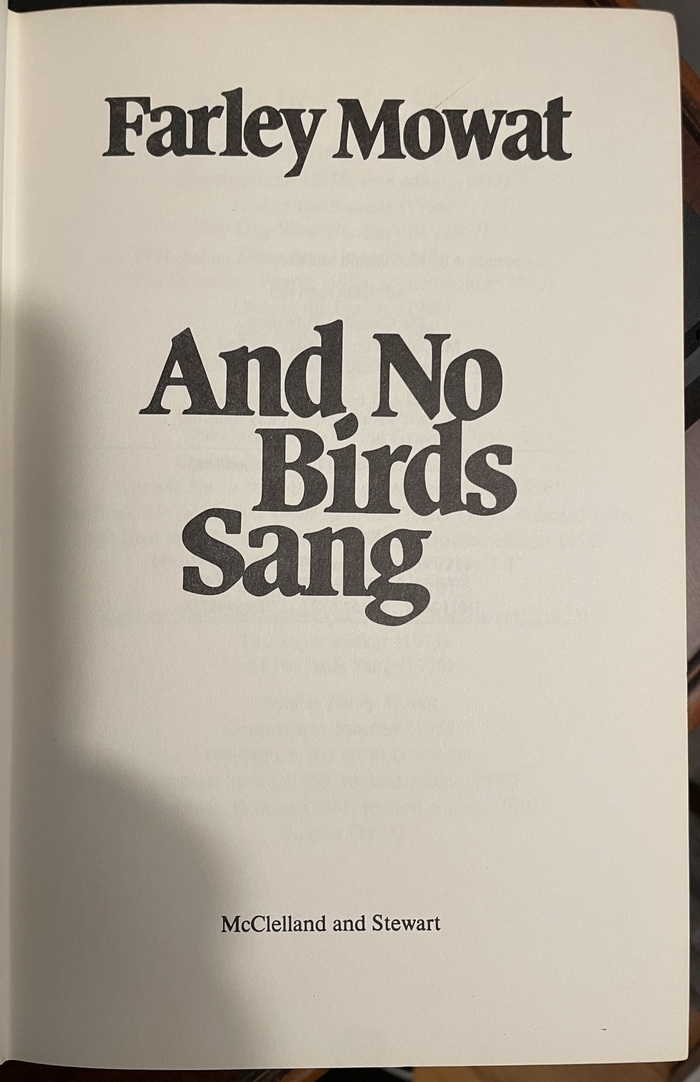
Photo: Ian Hooker. Ian Hooker. License: All Rights Reserved.
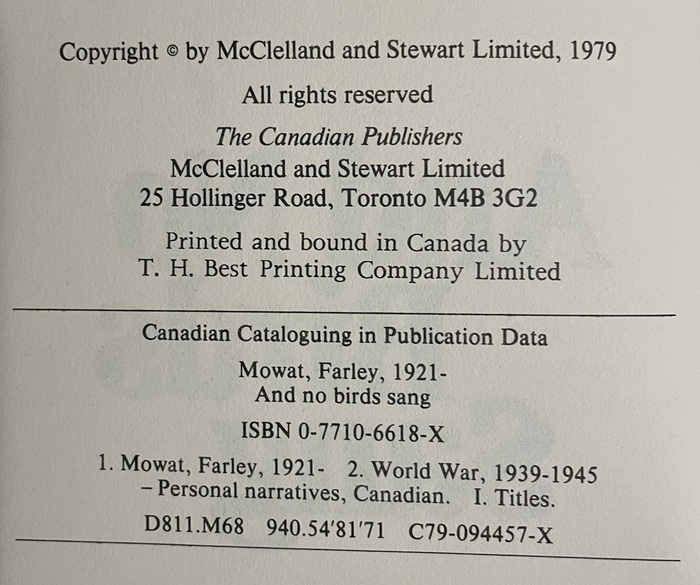
Photo: Ian Hooker. Ian Hooker. License: All Rights Reserved.
The imprint uses Times New Roman with some Pilgrim.
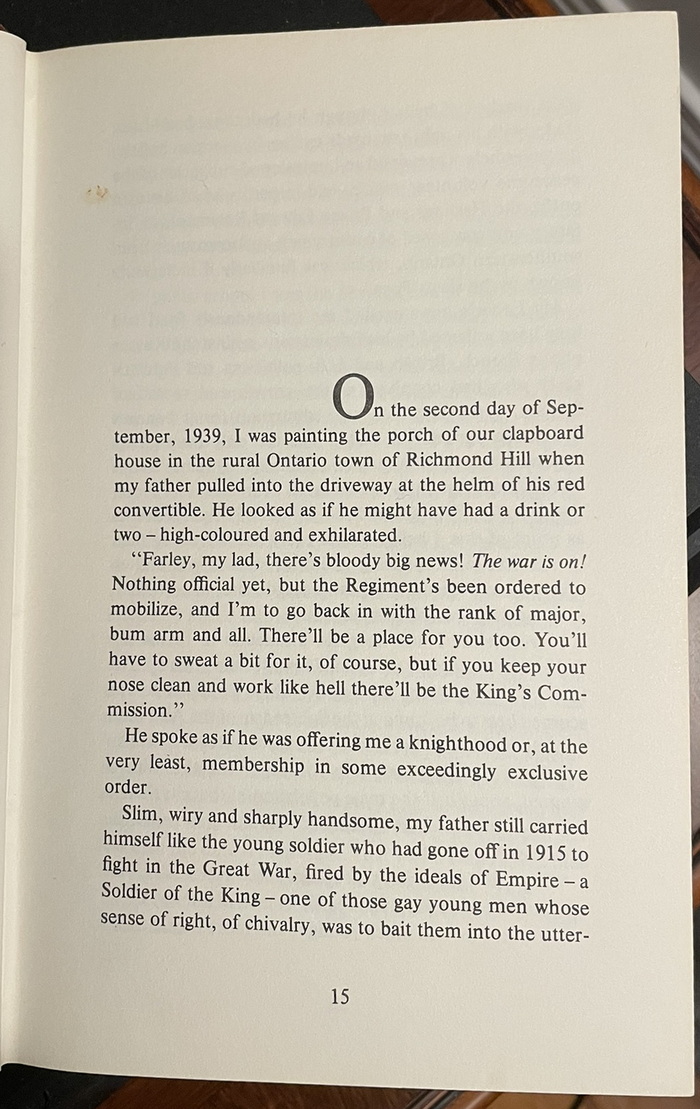
Photo: Ian Hooker. Ian Hooker. License: All Rights Reserved.
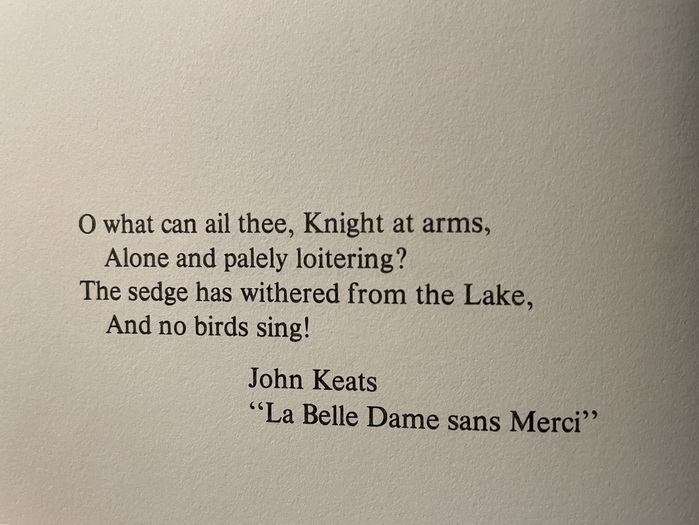
Photo: Ian Hooker. Ian Hooker. License: All Rights Reserved.
This post was originally published at Fonts In Use