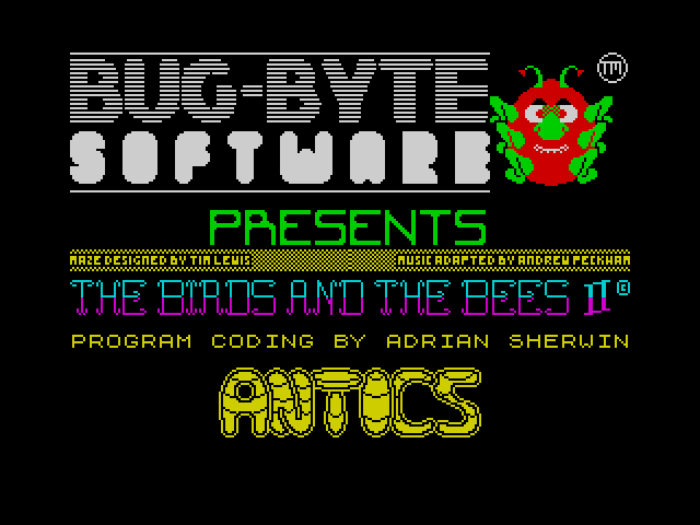
Bug-Byte Software logo (1981–1984)
Source: spectrumcomputing.co.uk License: All Rights Reserved.
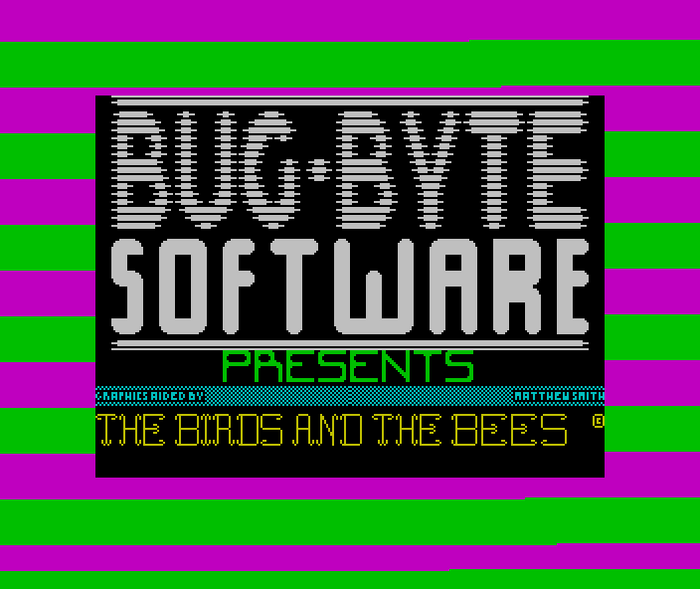
Loading screen for the ZX Spectrum video game The Bird and the Bees II: Antics


Bug-Byte Software was a UK software publishing house active at the end of the 1970s and the early part of the 1980s before it dissolved and was re-acquired and used as a brand label.
During its most popular and prolific period, when it published titles like Mazogs, Twin Kingdom Valley, The Bird and The Bees, and the hugely popular and influential Manic Miner, it often used the Bug-Byte wordmark in Television (and Microgramma). Antics, the sequel to The Bird and The Bees and published in 1984, may mark something of a transition: it appears the product packaging used a new neon wordmark, but the loading screen for the game itself has a rendition of the Television wordmark.
Source: archive.org License: All Rights Reserved.
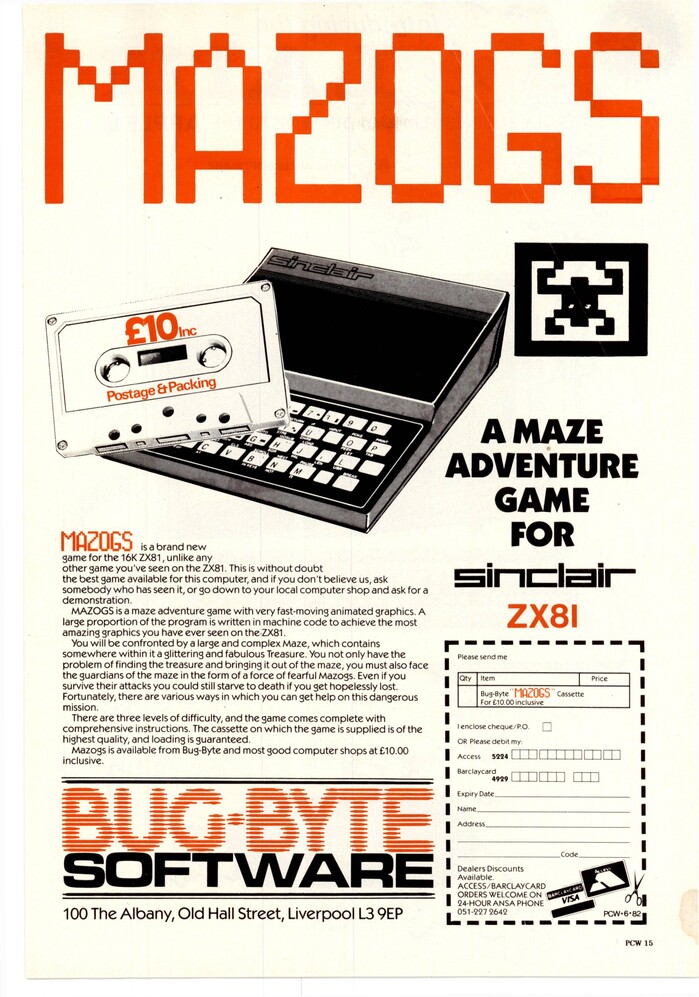
I don’t know if Mazogs, June 1982, is the first Bug-Byte advent to use the Television wordmark, but opposite this advert on the opening is a different Bug-Byte ad that has their wordmark in Penny Farthing. The copy in this ad uses ITC Kabel. Sinclair User in the same month runs the Mazogs advert in blue.
Source: www.zx81stuff.org.uk License: All Rights Reserved.
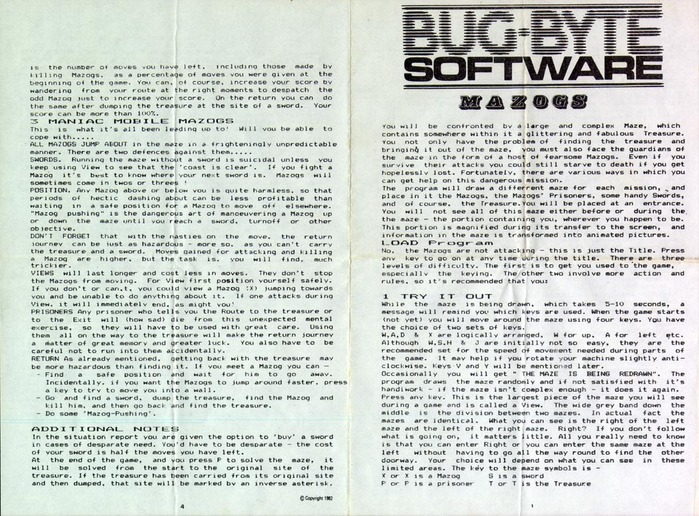
Detail from the instructions included with Mazogs, published 1981. The game title is in Profil. Body text is reproduced from material printed on an Epson FX-80 dot matrix printer, or something very similar.
Source: www.lemon64.com License: All Rights Reserved.
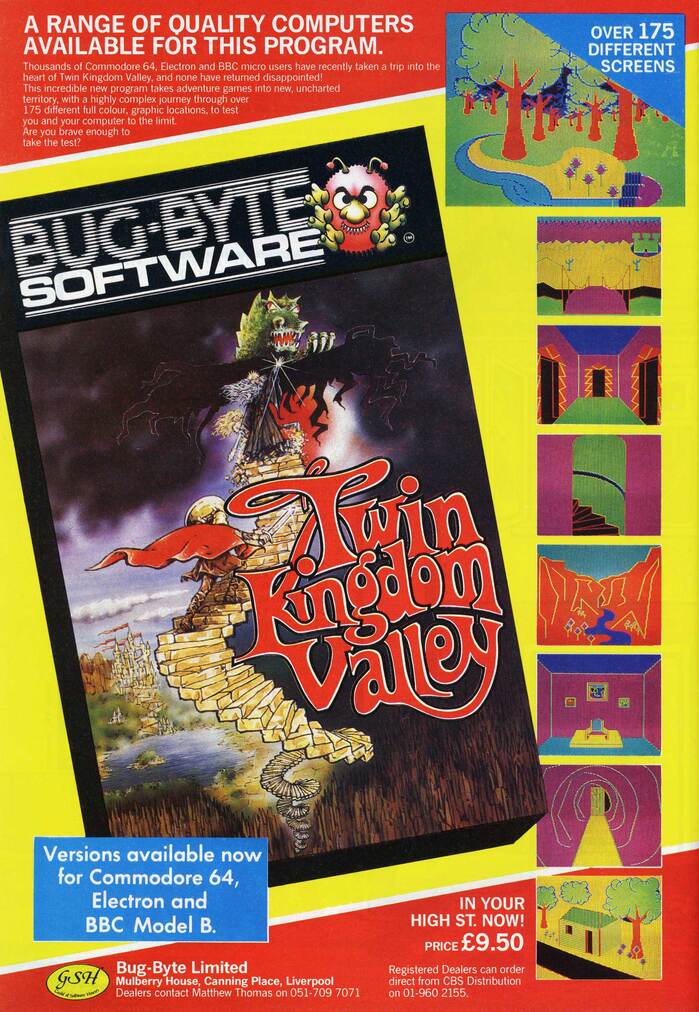
Advert for Twin Kingdom Valley, a text adventure. Or Interactive Fiction as some people now call them. Ad copy uses News Gothic and Futura.
Source: archive.org License: All Rights Reserved.
Wordmark rendered on the ZX Spectrum loading screen for The Birds and The Bees; clearly based on Television.
Source: archive.org License: All Rights Reserved.
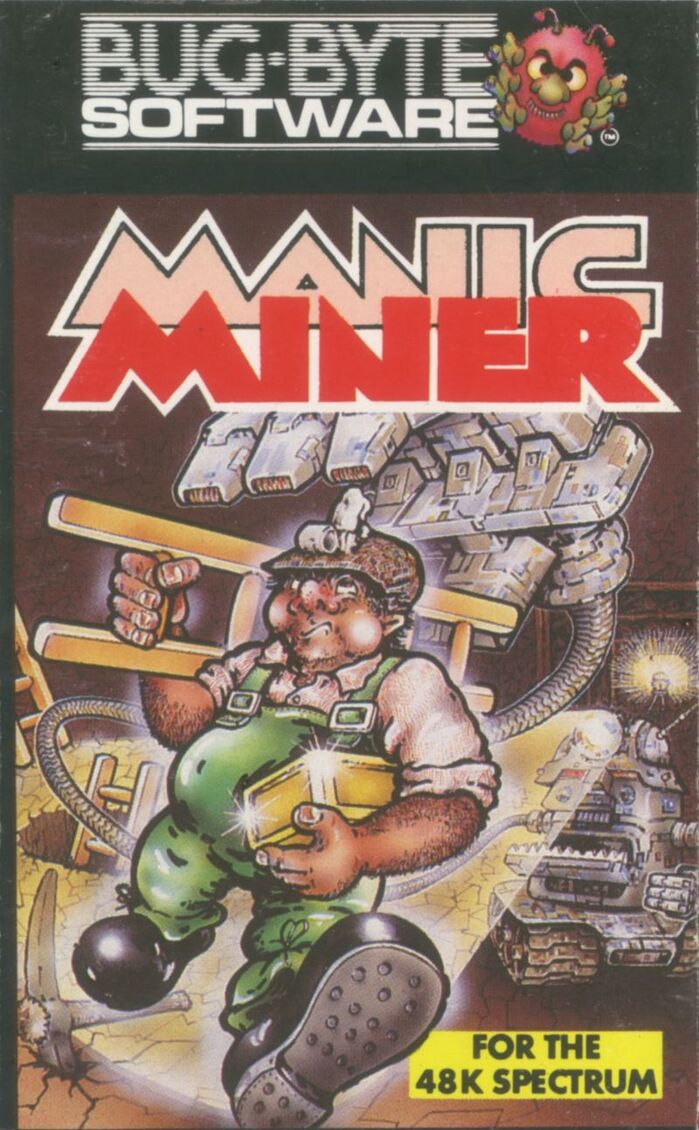
Cassette inlay cover for the ZX Spectrum version of Manic Miner published by Bug-Byte (also later published by Software Projects).
This post was originally published at Fonts In Use