The Silmarillion by J.R.R. Tolkien
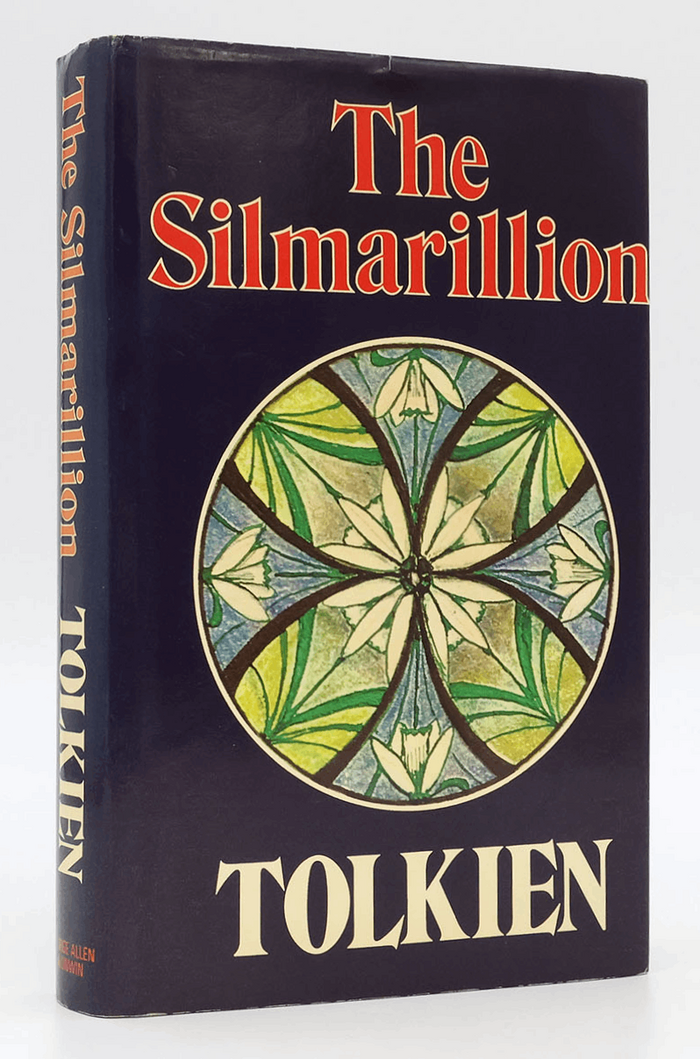
Source: www.abebooks.com Lucius Books. License: All Rights Reserved.



From Wikipedia:
The Silmarillion (Quenya: [silmaˈrilːiɔn]) is a book consisting of a collection of myths and stories in varying styles by the English writer J.R.R. Tolkien. It was edited, partly written, and published posthumously by his son Christopher in 1977, assisted by Guy Gavriel Kay, who became a fantasy author. It tells of Eä, a fictional universe that includes the Blessed Realm of Valinor, the ill-fated region of Beleriand, the island of Númenor, and the continent of Middle-earth, where Tolkien's most popular works—The Hobbit and The Lord of the Rings—are set. After the success of The Hobbit, Tolkien’s publisher, Stanley Unwin, requested a sequel, and Tolkien offered a draft of the writings that would later become The Silmarillion. Unwin rejected this proposal, calling the draft obscure and “too Celtic”, so Tolkien began working on a new story that eventually became The Lord of the Rings.
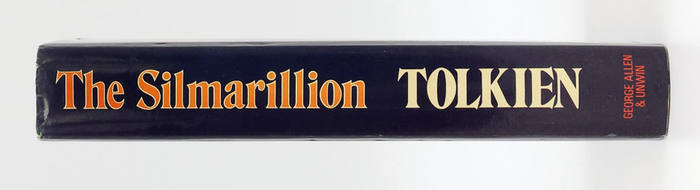
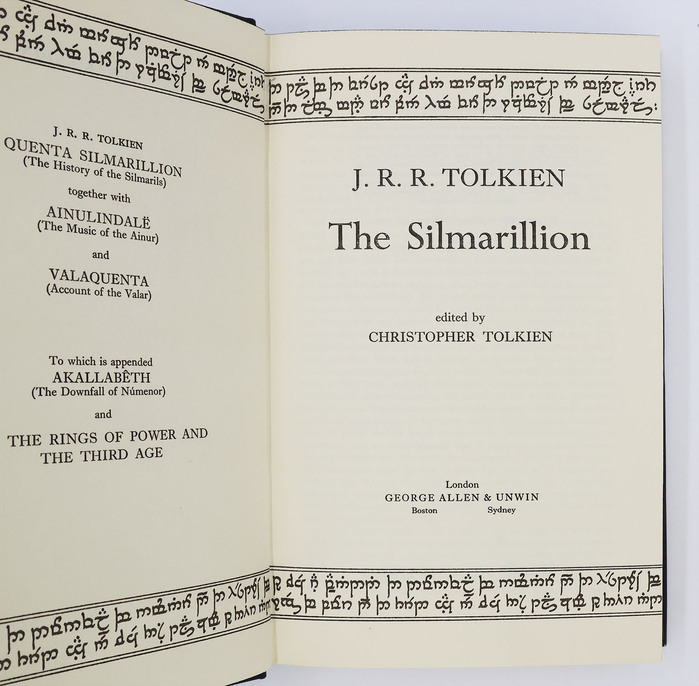
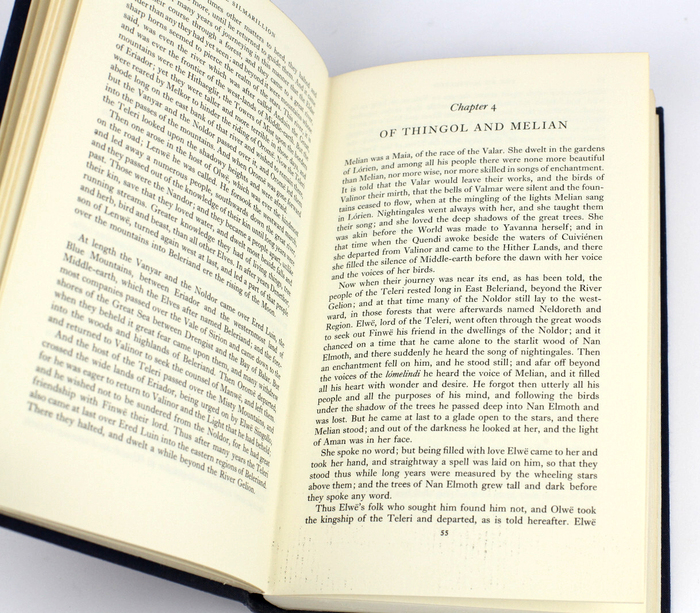
The first edition by Allen & Unwin uses Hawthorn on the book jacket, with emblems drawn by Tolkien himself: Lúthien Tinúviel’s on the front panel, and those of Fingolfin, Eärendil, Idril Celebrindal, Elwë, and Fëanor on the back. The title page is set in Perpetua and Imprint. The latter is also used as text typeface.
Source: www.abebooks.com Lucius Books. License: All Rights Reserved.
Source: www.abebooks.com Lucius Books. License: All Rights Reserved.
Source: www.abebooks.com Bushido Books (edited). License: All Rights Reserved.
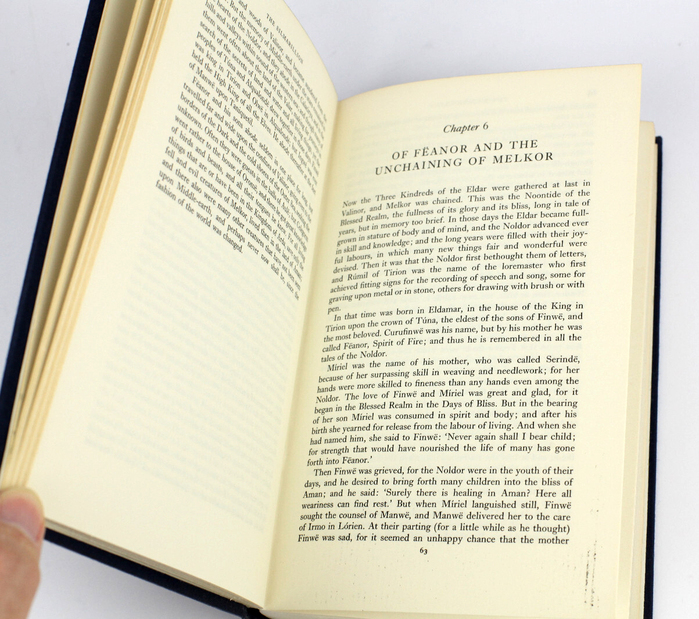
Source: www.abebooks.com Bushido Books (edited). License: All Rights Reserved.
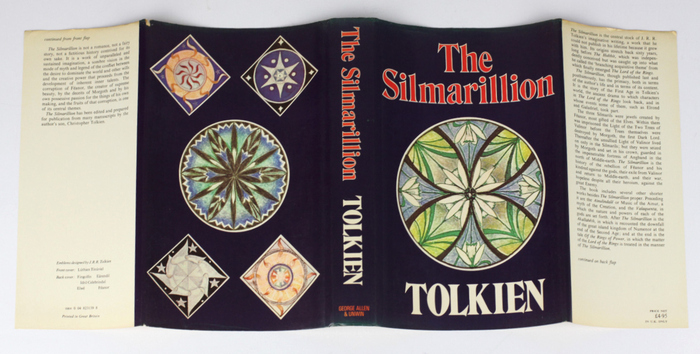
Source: www.abebooks.com Bushido Books (edited). License: All Rights Reserved.
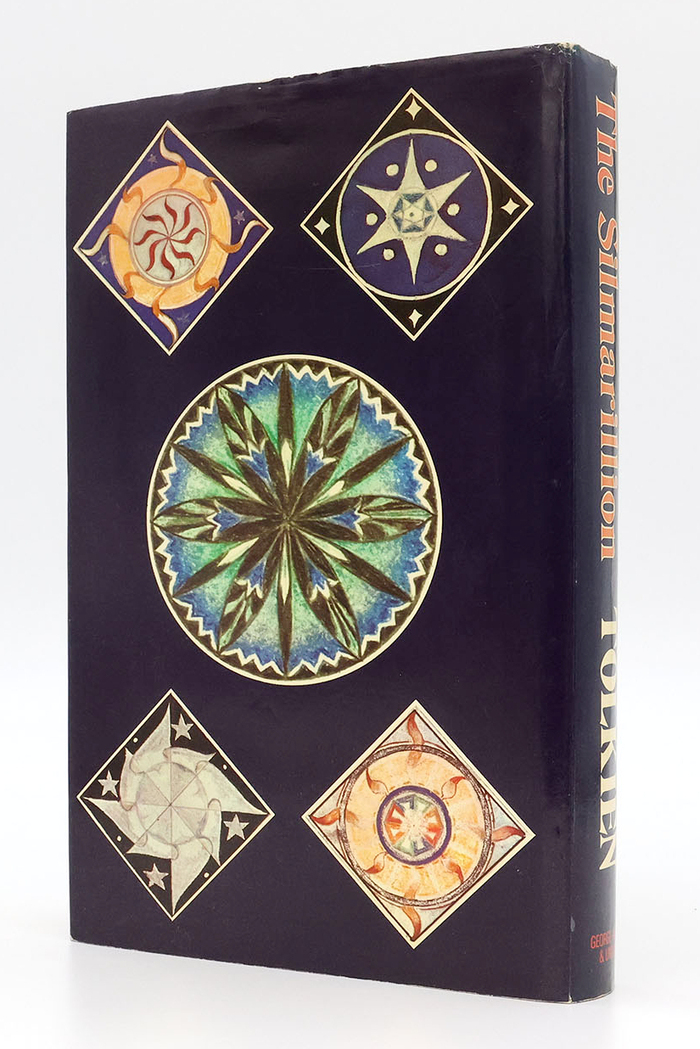
Source: www.abebooks.com Lucius Books. License: All Rights Reserved.
This post was originally published at Fonts In Use