The Powerpuff Girls picture story books

Source: www.ebay.com daisysgiftshop (edited). License: All Rights Reserved.
Bubble Trouble by Laura Dower, May 2000. Cover design by Peter Kobish.


Around 2000, Scholastic published a series of picture story books adapted from Cartoon Network’s Powerpuff Girls. The main typeface on the covers (and, for some books, also on interior pages) is Whachouse. Designed in 1993 as part of House Industries’ General Collection, Ken Barber’s bold wide semi-slab appears to be inspired by faces like Benguiat Interlock. A decade later, in 2004, House Industries would collaborate with Ed Benguiat on a more advanced interpretation of a similar design, Ed Interlock.
Whachouse is typically used with one or more colored contours and a curved setting of the subtitle. All smaller text is in Zuzana Licko’s Base 9 Sans.
The Powerpuff Girls logo is custom drawn and doesn’t use a font. There at least two fonts based on it, though: Powerpuff Girls by Tom White and Powerpuff by Neale Davidson of Pixel Sagas (2011–2014, revised in 2015 and renamed Utonium). The Cartoon Network logo that’s partly visible in the top right corner uses Eagle, see the dedicated post.
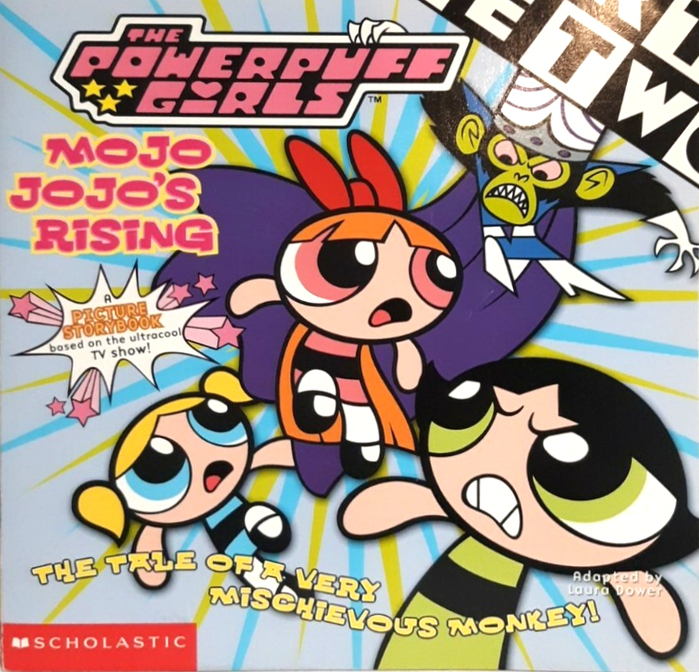
Source: www.ebay.com louis614*. License: All Rights Reserved.
Mojo Jojo’s Rising by Laura Dower, April 2000. Cover design by Peter Kobish.
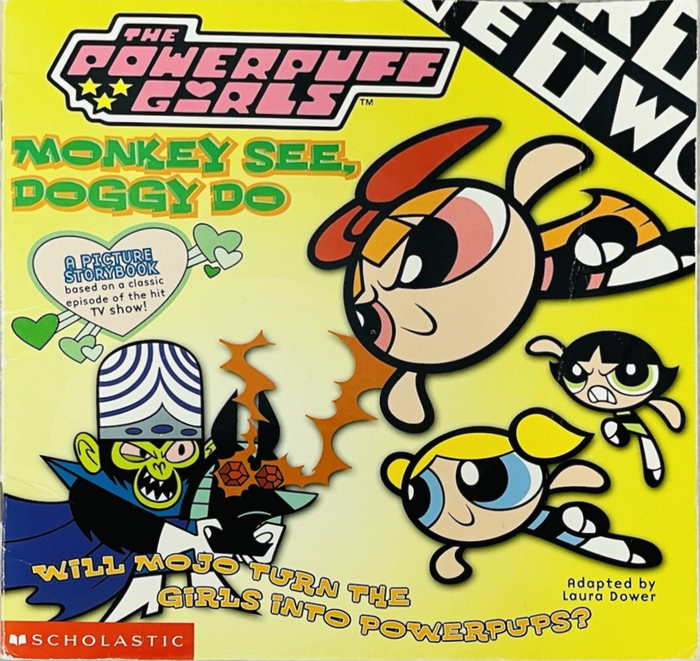
Source: www.ebay.com BubbleBoxGems (edited). License: All Rights Reserved.
Monkey See Doggy Do by Laura Dower, October 2000. Cover design by Peter Kobish.

Source: archive.org Internet Archive. License: All Rights Reserved.
Snow-Off by E.S. Mooney, December 2000. Design by Louise Bova.

Source: archive.org Internet Archive. License: All Rights Reserved.
Beat Your Greens by Laura Dower, 2001

Source: www.ebay.com Kayleighbug Books. License: All Rights Reserved.
Fishy Business by Laura Dower, 2001. Cover by Christopher Cook, design by Louise Bova.

Source: archive.org Internet Archive. License: All Rights Reserved.
The Mane Event by Alice Jablonsky, 2002. Cover by Bill Alger, design by Bethany Dixon.
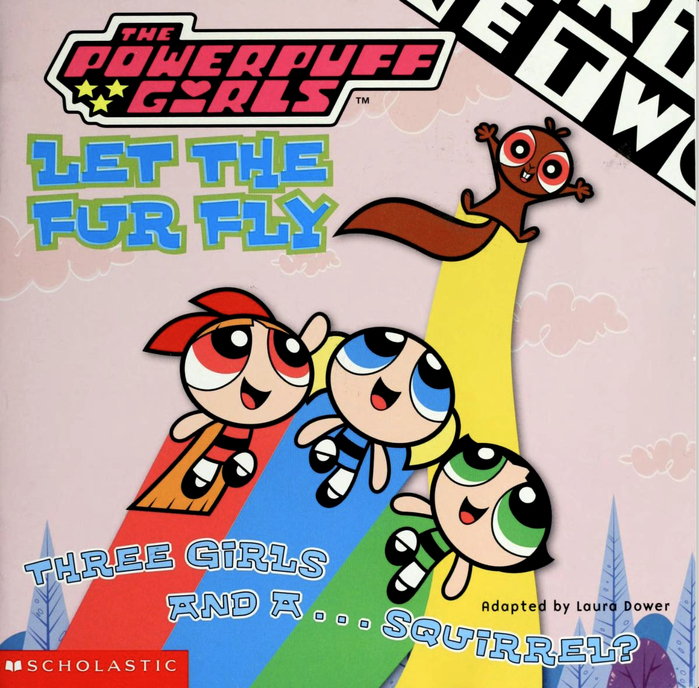
Source: archive.org Internet Archive. License: All Rights Reserved.
Let the Fur Fly by Laura Dower, 2002. Cover by Carlo Lo Raso, design by Peter Kobish.
This post was originally published at Fonts In Use