Fairytales are True – Museo delle Civiltà di Roma
Nicolas Polli. License: All Rights Reserved.

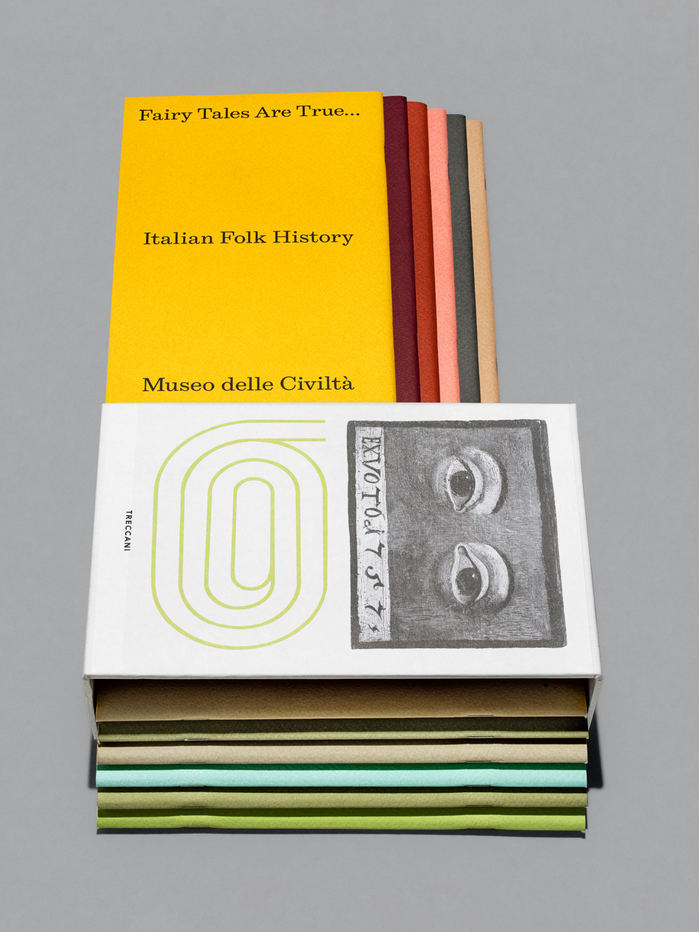
Le fiabe sono vere…Storia popolare italiana (“Fairy Tales are true... Italian Folk History”) reimagines the Museo delle Civiltà’s folk art collection, making it more physically, intellectually, and culturally accessible.
The exhibition transforms the showcase from a protective device into an open, flexible archive. Objects are presented not as autonomous artworks but as carriers of collective memory. Drawers, sliding surfaces, and layered narratives invite direct engagement and multiple readings.
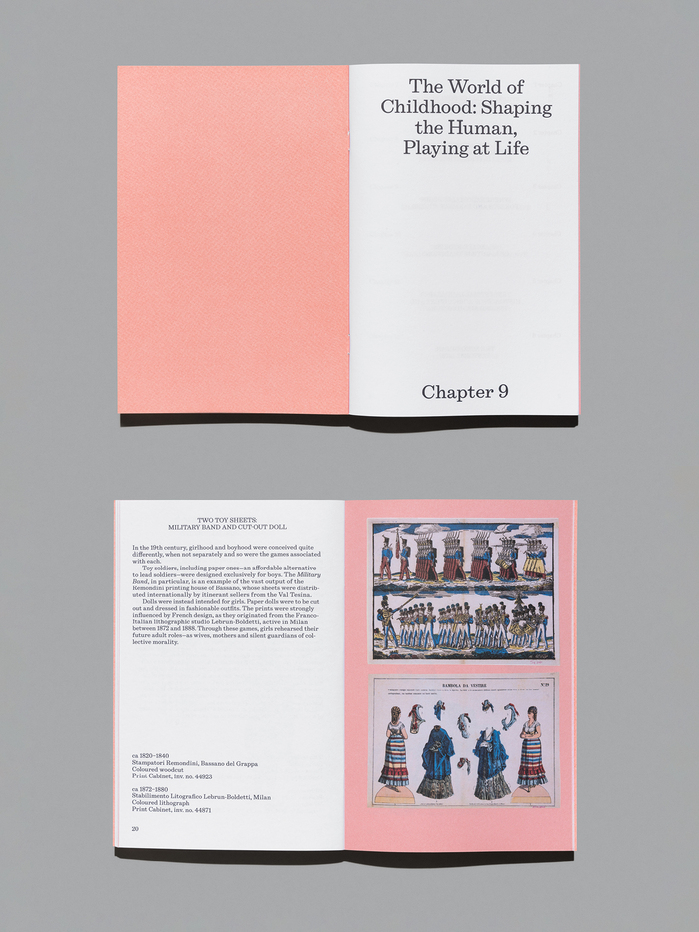
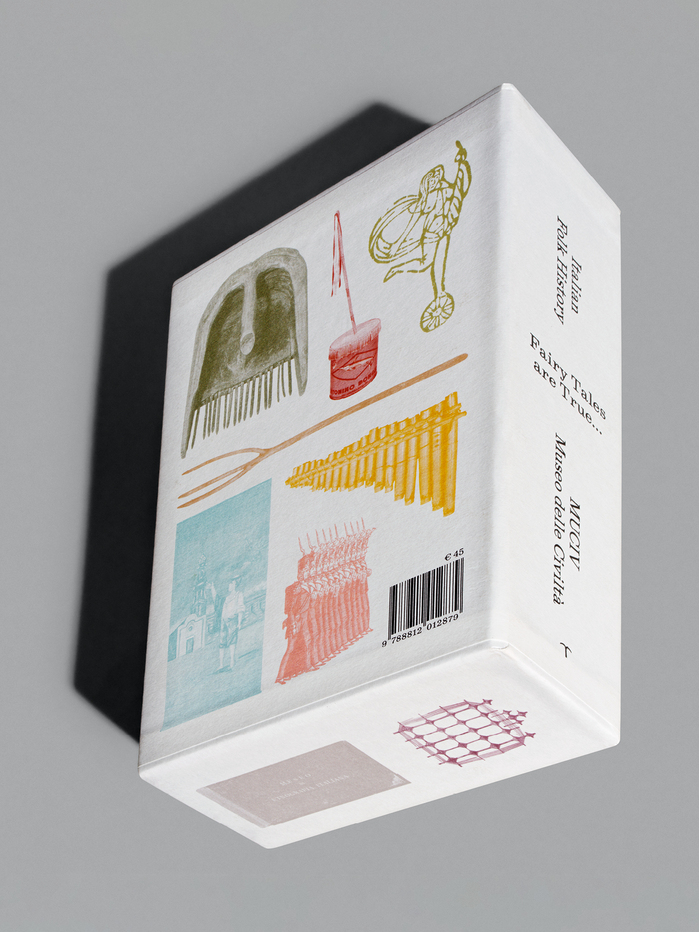
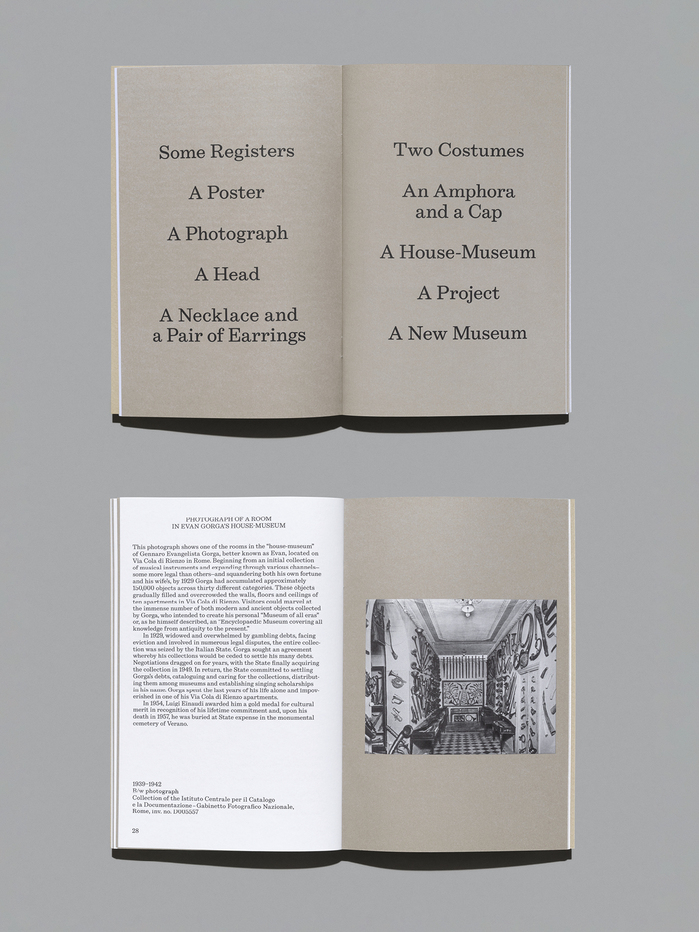
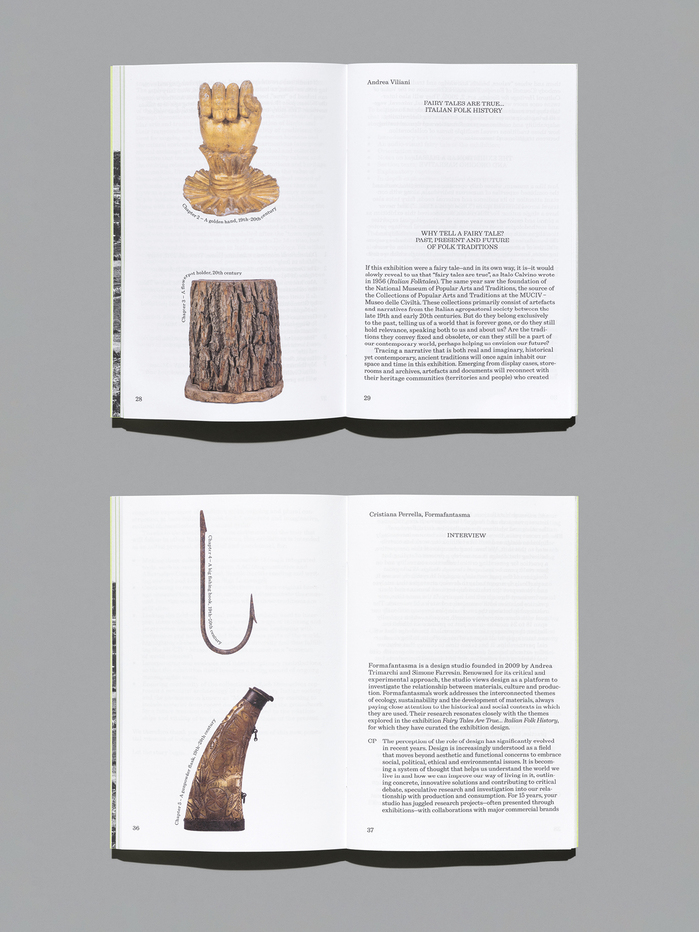
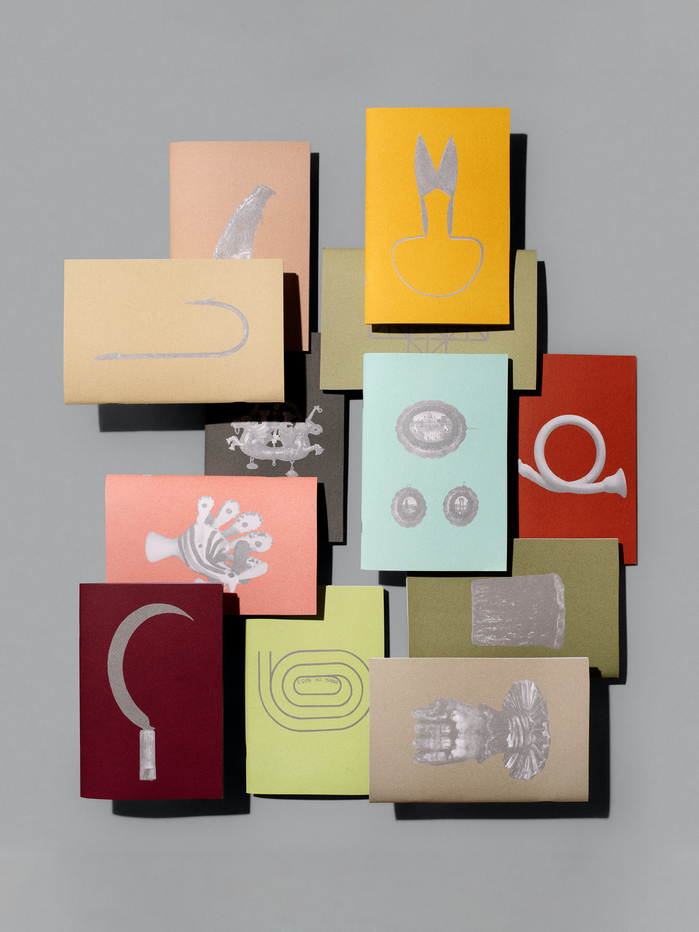
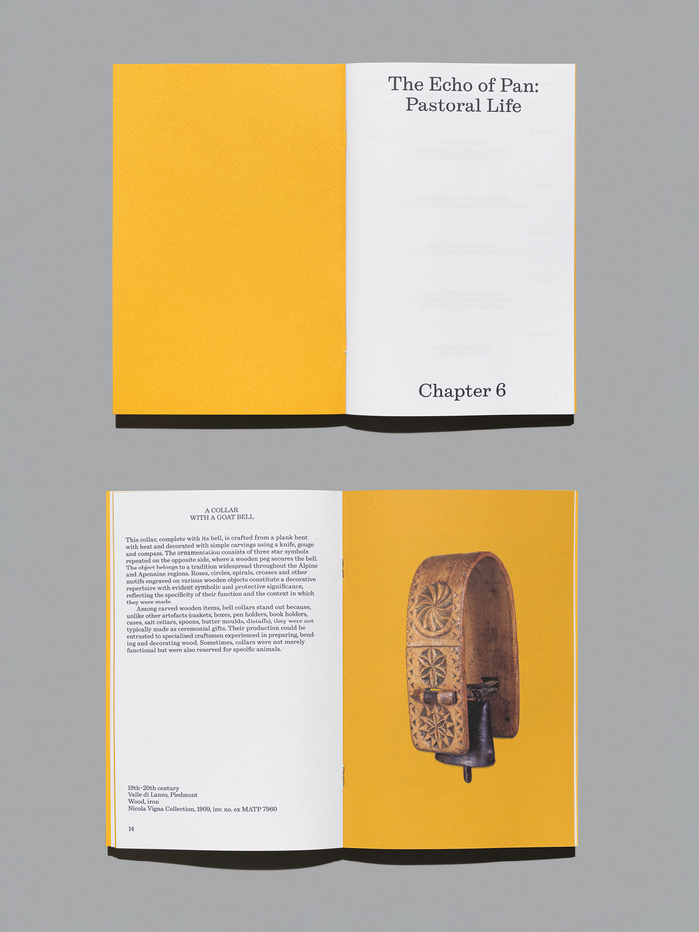
The printed catalogue, designed by Omnigroup and edited by publisher Treccani Arte, translates the exhibition’s structure into twelve standalone chapters, encouraging a non-linear reading within a unified narrative. Each booklet offers an in-depth analysis of the topics presented in the corresponding section of the exhibition, exploring Italy’s ethnographic heritage through cultural spaces such as the forest, the sea, the countryside and the village. Colour serves as a means of identification within the catalogue, echoing the thematic sequence used in the exhibition to guide the visitor’s experience avoiding hierarchical order.
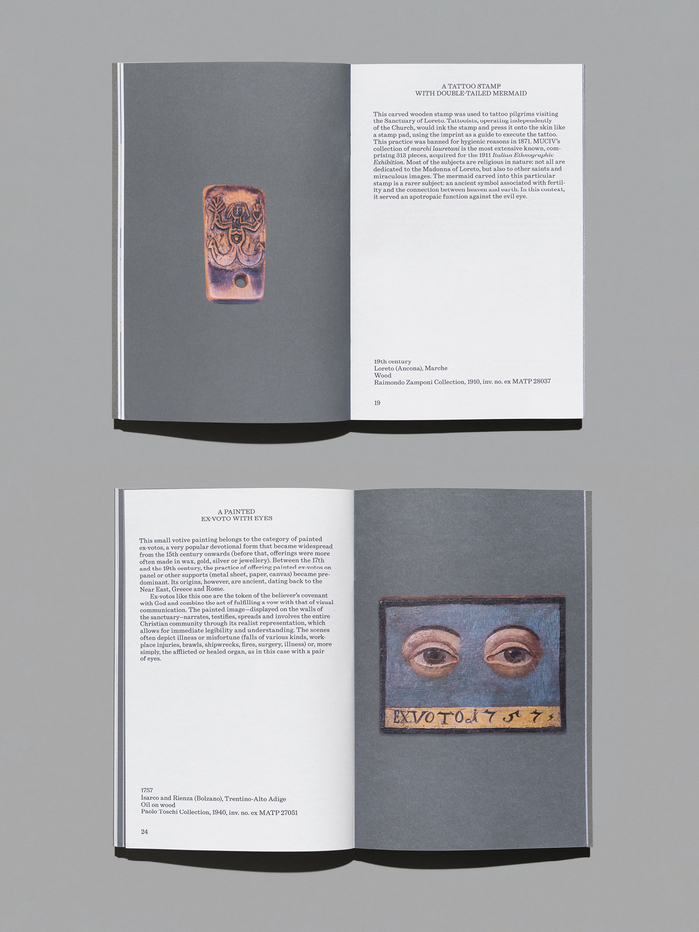
In response to the metaphor used in the title, the fairy-tale narrative unfolds through a stream of object portraits, identified from among the more than 500 items on display, and weaves through the arc of Italian history in the 19th and 20st centuries under the lens of millennial traditions that can serve as a potential archaeology of the present.
The typographic identity of the catalogue is tuned around the unreleased serif typeface OT Kairo, used in a single weight and in a few text settings, in order to provide solid yet discreet support for the content, already populated by countless individual stories with the aim of providing a stable backdrop against which to articulate plurality.
Nicolas Polli. License: All Rights Reserved.
Nicolas Polli. License: All Rights Reserved.
Nicolas Polli. License: All Rights Reserved.
Nicolas Polli. License: All Rights Reserved.
Nicolas Polli. License: All Rights Reserved.
Nicolas Polli. License: All Rights Reserved.
Nicolas Polli. License: All Rights Reserved.
This post was originally published at Fonts In Use