Continental currency banknotes
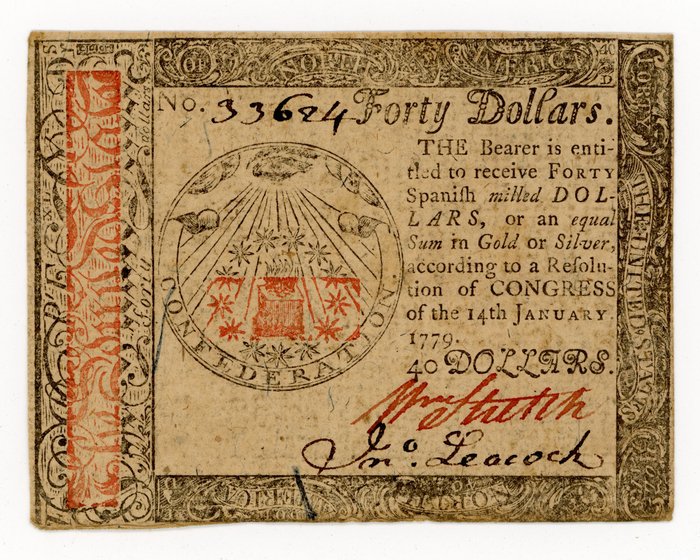
Source: collectionsonline.southstreetseaportmuseum.org License: Public Domain.
Obverse of a 1779 $40 note. “Forty Dollars” at the top is in Union Pearl, and “DOLLARS” at the bottom is in English Scriptorial No. 1.


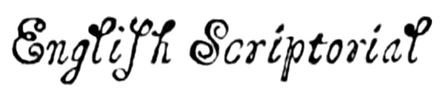
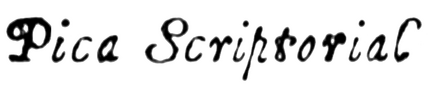
From 1775 to 1779, the Continental Congress issued almost 200 million dollars of Continental currency in order to finance the Revolutionary War. The banknotes were printed by Hall & Sellers in Philadelphia – formerly B. Franklin & D. Hall, the printing business founded by Benjamin Franklin.
The notes were printed using William Caslon’s types, alongside three of the Grover foundry’s typefaces, dating from the turn of the century: Double Pica Union Pearl, Pica Scriptorial, and English Scriptorial No. 1.
The Scriptorials are also referred to as Cursorials. The same three fonts are shown together in a specimen published by Benjamin Franklin Bache, Benjamin Franklin’s grandson.
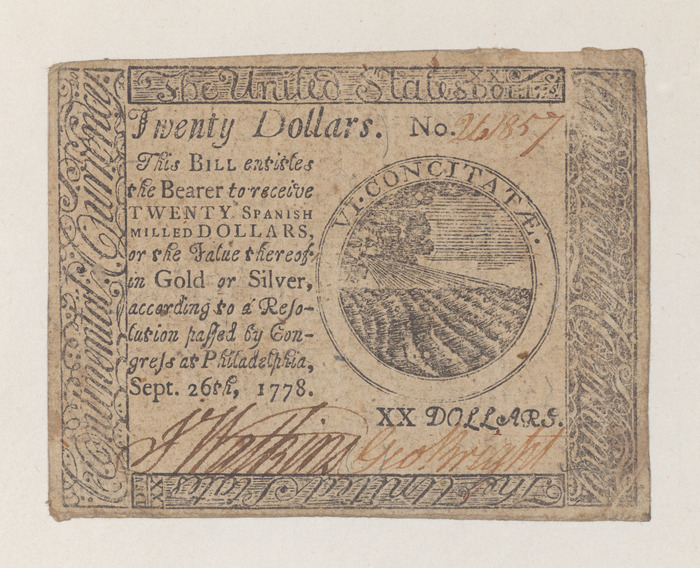
Source: www.metmuseum.org License: Public Domain.
Obverse of a 1778 $20 note. “Twenty Dollars” is in Union Pearl (except for the D), and the italic text (including “DOLLARS” at the bottom right) is in Pica Scriptorial.
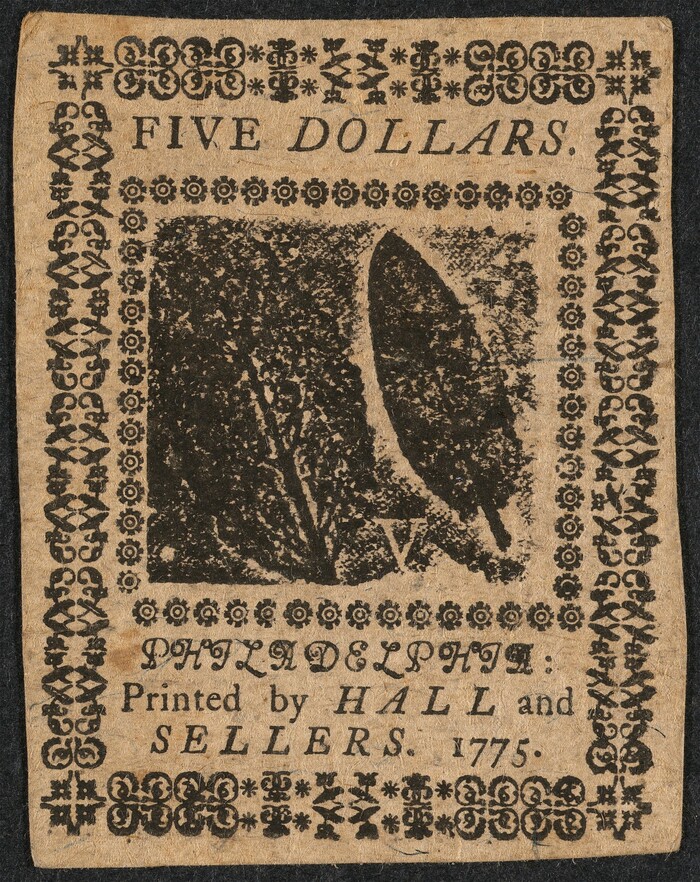
Source: commons.wikimedia.org License: Public Domain.
Reverse of a 1775 $5 note. “PHILADELPHIA” is in English Scriptorial No. 1.
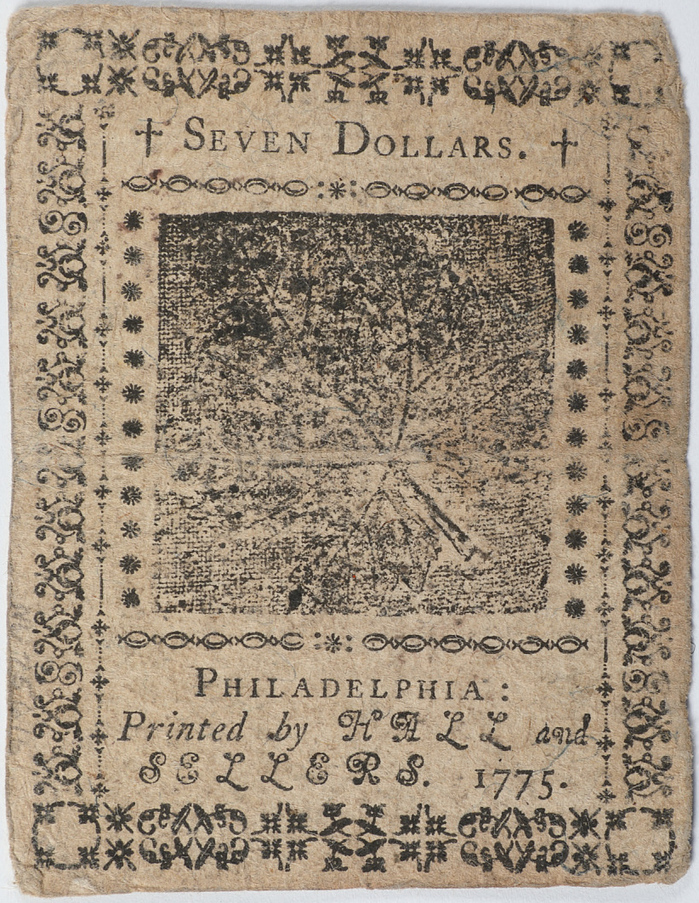
Source: americanhistory.si.edu License: Public Domain.
Reverse of a 1775 $7 note. “HALL and SELLERS” is in English Scriptorial No. 1.
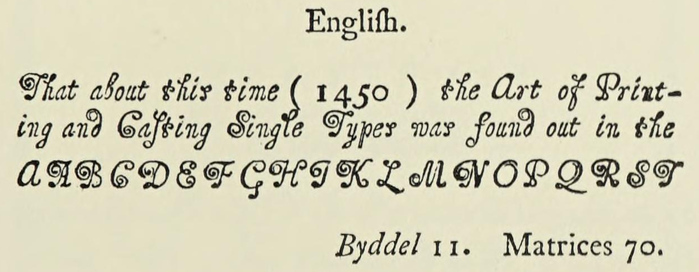
Source: archive.org License: Public Domain.
A specimen of English Scriptorial No. 1, from the 1782 auction catalogue of the John James foundry. John James had bought the Grover foundry in 1758.
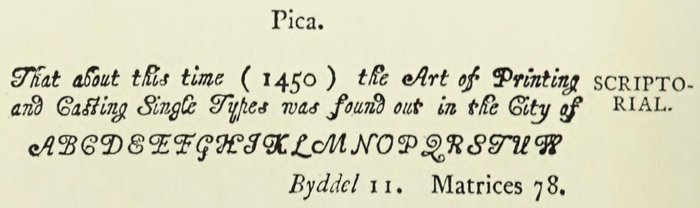
Source: archive.org License: Public Domain.
A specimen of Pica Scriptorial, from the same source
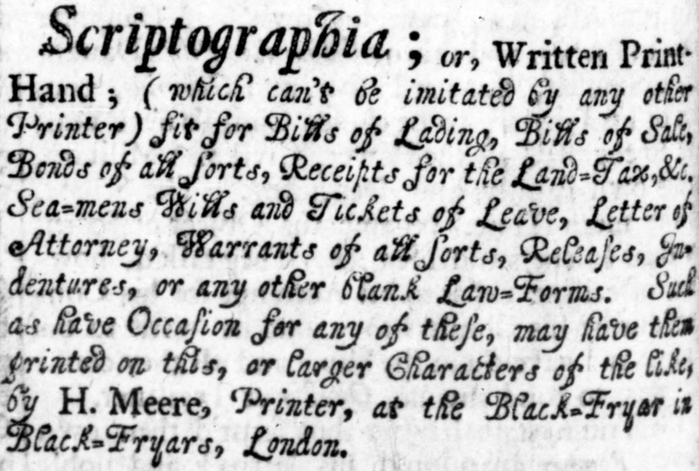
Source: archive.org License: Public Domain.
An advertisement promoting the use of Grover’s Scriptorials for legal documents, published in The Observator, February 11–7 [sic], 1708. The word “Scriptographia” is in Union Pearl, and the majority of the rest of the text is in Pica Scriptorial.
This post was originally published at Fonts In Use