Lines of Control: Railroads, Resistance, and the Reordering of Semi-Colonial Space, 1898–1905
Published December 2, 2025
By FontsInUse
Contributed by Zhihan Qian
Source: dreamlaborpress.com Dream Labor Press. License: All Rights Reserved.



Source: dreamlaborpress.com Dream Labor Press. License: All Rights Reserved.

Source: dreamlaborpress.com Dream Labor Press. License: All Rights Reserved.
Source: dreamlaborpress.com Dream Labor Press. License: All Rights Reserved.
Source: dreamlaborpress.com Photo: Zhihan Qian. Dream Labor Press. License: All Rights Reserved.
Source: dreamlaborpress.com Dream Labor Press. License: All Rights Reserved.
This post was originally published at Fonts In Use
Source: dreamlaborpress.com Dream Labor Press. License: All Rights Reserved.
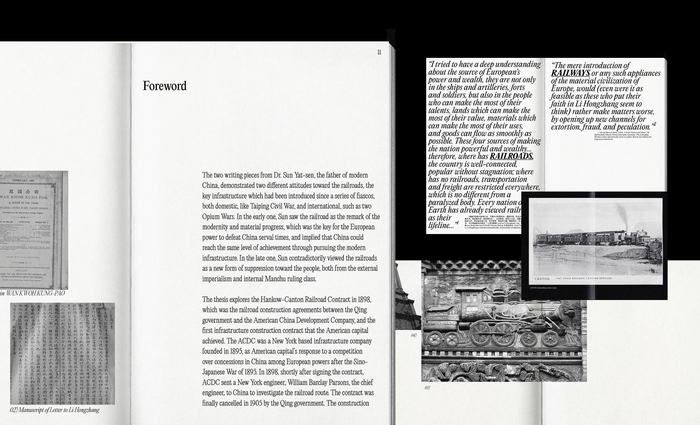
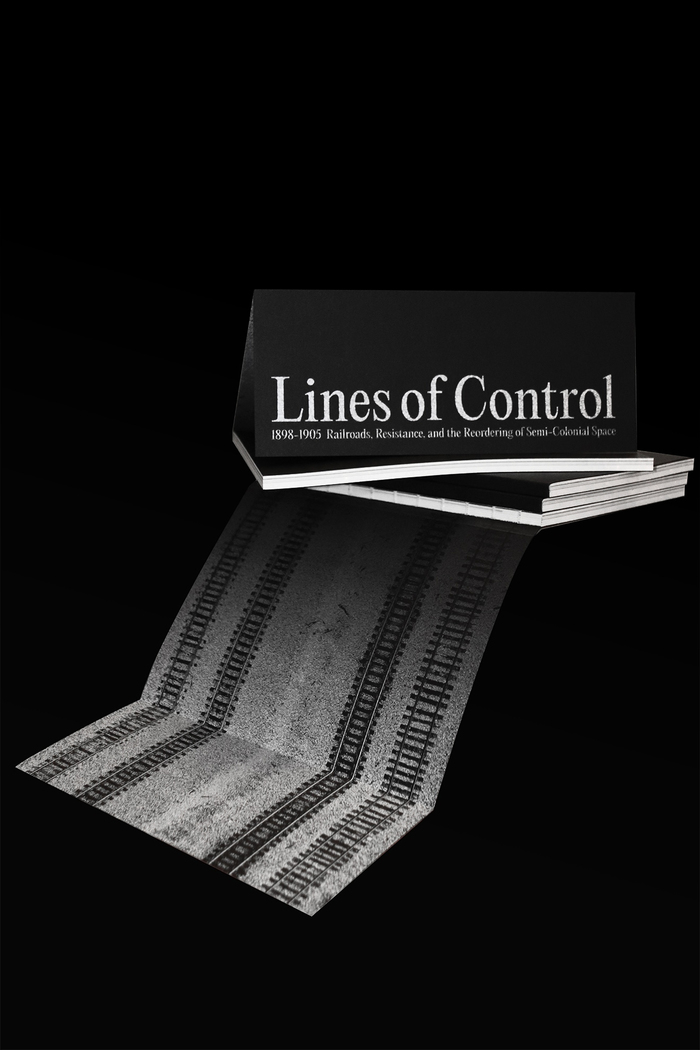
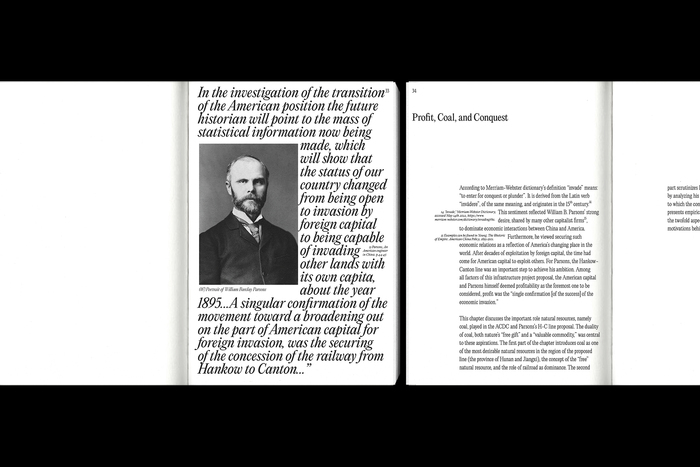
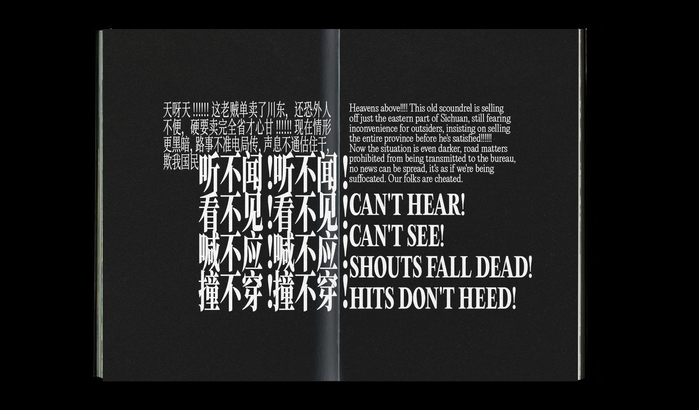
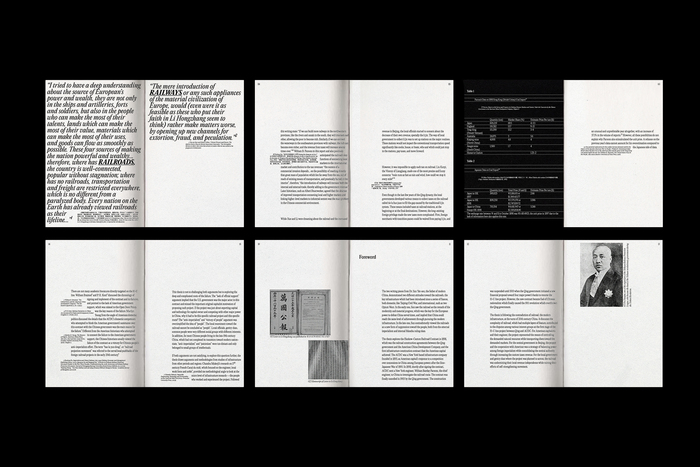
This book traces how railroads became a contested symbol of modernity in late Qing China. Through the 1898 Hankow–Canton Railroad Contract between the Qing government and the American China Development Company, this project examines the intersection of imperial capitalism, fiscal reform, and provincial resistance. Drawing from archival contracts, engineering surveys, and historical writings, it reinterprets infrastructure as both a physical system and an ideological apparatus that reshaped colonial space. The visual design—restrained, archival, cartographic—mirrors the bureaucratic logic of control while revealing the tensions between modernization and subjugation embedded in these historical documents.
Source: dreamlaborpress.com Dream Labor Press. License: All Rights Reserved.
Source: dreamlaborpress.com Dream Labor Press. License: All Rights Reserved.
Source: dreamlaborpress.com Dream Labor Press. License: All Rights Reserved.
Source: dreamlaborpress.com Photo: Zhihan Qian. Dream Labor Press. License: All Rights Reserved.
Source: dreamlaborpress.com Dream Labor Press. License: All Rights Reserved.
This post was originally published at Fonts In Use
Read full story.
WRITTEN BY
FontsInUse
An independent archive of typography.
More from FontsInUse